Embryo screening, polygenic scores and eugenics fears
What companies sell as embryo screening, how little a polygenic score predicts for one embryo, what professional bodies say about it, and the history and the eugenics question behind it.
What companies sell as embryo screening, how little a gene score can say about one embryo, what expert groups say, and the history and fears behind it.
What the tests are, and what companies sell Established
Preimplantation genetic testing for polygenic disorders, or PGT-P, genotypes embryos created during IVF and returns a polygenic risk score for each one. The score is a statistical estimate of an embryo's chance of developing a condition later in life. Companies sell it direct to patients who are already having IVF.1
Genomic Prediction reported the first clinical application of PGT-P in 2019.2 The company's own paper modeled a 45 to 72 percent reduced risk for type 1 diabetes from selecting between siblings, and reported the first clinical case; the authors work for the company, so this is a developer-run claim, not independent evidence.2
As of October 2026, the company Orchid advertises whole-genome embryo screening and lists "Autism Spectrum Disorders" among the more than 1,700 conditions it says it screens embryos for.3 The company Herasight advertises screening for conditions and for traits such as intelligence, shows an example "Autism report results" slide, and lists an "Autism predictor" as upcoming.4
A 2024 review of the field found that the companies then offering polygenic embryo screening screened only for medical conditions, while critics feared it would extend to non-medical traits; the review records that screening for height and intelligence had been offered by one company earlier.1 By 2025 at least one company was advertising trait screening again.4
Some companies sell a test for embryos made during IVF. It is called PGT-P. Each embryo gets a score, called a "polygenic risk score". It is a guess about the chance of a health problem later in life. Companies sell the test to people already having IVF.1
The company Genomic Prediction said it did the first such test in 2019.2 Its own scientists wrote about choosing between siblings. They said this could cut the risk of type 1 diabetes by about half to three quarters. The writers work for the company. So this is the company's own claim.2
As of October 2026, a company called Orchid says it can screen embryos for more than 1,700 conditions. Its list includes "Autism Spectrum Disorders".3 Another company, Herasight, says it can screen for traits like intelligence. It shows an example "Autism report results" slide. It lists an "Autism predictor" as coming soon.4
A 2024 review found that the companies selling this then screened only for diseases. Critics worried it would grow to include traits. The review notes one company had offered height and intelligence screening earlier.1 By 2025 one company was advertising trait screening again.4
Dated facts about what named companies advertise and what peer-reviewed accounts of the field describe. A company's own marketing is a document, not evidence.
These are dated facts about what named companies say and what experts describe.
How much a polygenic score predicts for one embryo Emerging
Polygenic scores predict complex traits weakly, and a single embryo is the hardest case. In a study that used theory, simulations and real family data, the average gain from picking the highest-scoring embryo was about 3 centimeters of height and about 3 IQ points out of about ten embryos, and about 2.5 of each at the five or so embryos a typical IVF cycle yields, with wide prediction intervals; the gain rose only slowly as the number of embryos grew, and in large families the majority of children who scored highest for height were not the tallest.5
A 2021 analysis in the New England Journal of Medicine set out the factors that lower a polygenic score's predictive power in embryo selection, among them the score's ancestry-specific accuracy and the small number of embryos available.6 For a European-ancestry couple choosing the lowest-scoring embryo out of ten, modeled relative risk reductions for a single disease ranged from 15 to 35 percent, with a median of 22 percent; the predicted reduction was substantially lower for couples of non-European ancestry.6,1
The size of the reduction depends heavily on the strategy. Selecting the single lowest-scoring embryo out of five gave about a 50 percent relative reduction in the modeled risk of schizophrenia, but because schizophrenia is uncommon, the absolute reduction was about 0.5 percentage points: an embryo chosen at random had a 99 percent chance of not developing it, against 99.5 percent for the lowest-scoring one.7 When the strategy was only to set aside the highest-scoring embryos rather than to pick the lowest, the modeled reduction stayed under 10 percent at current polygenic score accuracy.7
The estimates fall further when they are placed in real IVF. A 2026 preprint modeled screening on 6,944 ovarian stimulation cycles from 4,452 Italian patients and 2,138 donor cycles, and estimated relative risk reductions of about 1 to 3 percent in completed cycles that produced a live birth, under 0.5 percent in an intention-to-screen analysis, and about 2 to 5 percent once incomplete cycles were included. The same preprint reports larger reductions for fertile egg donors, about 20 percent, and about 5 to 10 percent when all of a patient's cycles are pooled; for typical infertility patients it concludes the benefit would be small. The preprint has not been peer reviewed, and the effect is simulated.8
A polygenic score says little about one embryo. One study used math, computer models, and real families. It looked at picking the best embryo out of about ten. This added about 3 centimeters of height or about 3 IQ points. A typical IVF cycle gives about five embryos. Then the gain was about 2.5 of each. The gain grew very slowly with more embryos. In big families, the tallest child was usually not the one with the top score.5
A 2021 study listed the reasons a score predicts so little for an embryo. One reason is that scores work less well for people who are not of European ancestry. Another is that couples have only a few embryos.6
The way embryos are chosen matters a lot. Say a couple picks the single lowest-scoring embryo out of five. The modeled risk of schizophrenia fell by about half. But schizophrenia is rare, so the real drop was tiny. It went from about 1 in 100 to about 1 in 200.7 Now say the couple only throws out the highest-scoring embryos. Then the modeled drop stayed under 10 in 100.7
The numbers get smaller in real IVF. A 2026 preprint used records from 6,944 IVF cycles. It guessed the drop would be about 1 to 3 in 100 when a baby was born. It was under 0.5 in 100 if every cycle counted. The same preprint found bigger drops for egg donors, about 20 in 100. It found about 5 to 10 in 100 when all of a patient's cycles were pooled. The preprint is not yet checked by other scientists. The effect is only modeled.8
Every estimate here comes from modeling or simulation, not from following screened children. One rests on real family data and one on real IVF cycle data. The models agree that the absolute gain is small; relative reductions can be large for a single disease under favorable assumptions.
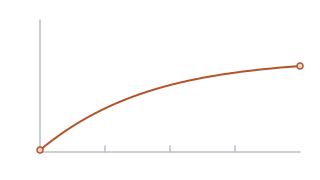
Predicted gain against number of embryos. Schematic: the average gain from choosing the highest-scoring embryo rises quickly at first and then flattens, so adding more embryos buys little more.
These numbers come from computer models, not from following real children. One comes from real families, and one from real IVF records. The models agree the real gain is small.
Predicted gain against number of embryos. Schematic: the average gain from choosing the highest-scoring embryo rises quickly at first and then flattens, so adding more embryos buys little more.
Polygenic scores for autism Established
Polygenic scores for autism exist in research and carry little information for one person. A 2025 systematic review and meta-analysis pooled 72 studies covering 720,087 people. Across nine studies, the autism polygenic score was associated with an autism diagnosis, with a meta-analytic correlation of 0.158 (95 percent confidence interval 0.067 to 0.249). The review found strong evidence for associations with social behavior, depression and motor skills, weak evidence for physical activity, and inconclusive results for other traits, with a median correlation of 0.03. The authors conclude that the autism polygenic score "does not have clinical utility and should be applied only for scientific purposes."9
The autism polygenic score is a research tool: the meta-analysis concludes it lacks clinical utility, and standard clinical genetic tests look for single-gene changes or copy-number variants rather than the many common variants that contribute to the score.9 At the same time, at least one company markets an autism risk estimate to people having IVF.4 No study found as of October 2026 reports a validated polygenic embryo score for autism.
Autism polygenic scores exist in research and tell little about one person. A 2025 review pooled 72 studies, covering 720,087 people. Across nine studies, the autism score went with an autism diagnosis. The link was weak, a correlation of 0.158. It also went with social behavior, depression, and motor skills. Results for other traits were mixed, and the links were small. The authors say the score "does not have clinical utility" and should be used only for science.9
The autism score is a research tool. The review says it is not useful in clinics. Standard clinic tests look for single-gene changes, not a polygenic score.9 Still, at least one company sells an autism risk guess to people having IVF.4 No study found as of October 2026 reports a tested autism embryo score.
A systematic review and meta-analysis of 72 studies, pooled across 720,087 people, agrees with earlier work that the score is a research tool.
A single number that adds up the small effects of many common genetic variants, used to estimate the chance of a trait or condition.
A large review pooled 72 studies of 720,087 people. It agrees with earlier work that the score is only for research.
One number that adds up the tiny effects of many common gene variants.
Prenatal testing and the eugenics it echoes Established
Prenatal screening has widened to test for a growing number of genetic conditions, through maternal blood screening, cell-free fetal DNA testing and carrier screening.10 No test detects autism before birth as of October 2026.
The disability-rights critique of this testing is the context for the eugenics fears. A 2025 review in the Annual Review of Genomics and Human Genetics traces how the eugenics movements of the twentieth century sought to prevent the birth of people with impairments that are today called disabilities, and how that legacy shapes genetic counseling now. The review sets out the critique that prenatal screening rests on mistaken assumptions about the quality of life of disabled people.10 The European Society of Human Genetics records that, as of 2022, at least one child had been born after PGT-P, and that no clinical research had yet assessed its diagnostic effectiveness in embryos.11
Prenatal screening now tests for many genetic conditions. It uses a mother's blood or a sample from the pregnancy.10 No test detects autism before birth as of October 2026.
Disabled people and their allies have long criticized this kind of testing. A 2025 review explains the history. It says the eugenics movements of the 1900s tried to stop the birth of people with disabilities. That history still shapes genetic counseling today. The review sets out the criticism. The criticism is that prenatal screening rests on wrong ideas about the lives of disabled people.10 The European Society of Human Genetics notes that, as of 2022, at least one child had been born after PGT-P. No research had yet tested how well it works in embryos.11
The history and the disability-rights critique come from a peer-reviewed review. The claim that no test detects autism carries its search date.
The history and the criticism come from a peer-reviewed review. The claim that no test finds autism carries its date.
What is not disputed Established
A polygenic score captures only part of the genetic contribution to a complex trait such as autism.5,9 No test detects autism before birth as of October 2026. The companies that sell embryo screening market it as a way to lower the chance of disease; the disagreement is over how much it can actually do, and what it should be used for.
A polygenic score captures only part of what makes a complex trait like autism.5,9 No test finds autism before birth as of October 2026. Companies sell embryo screening as a way to lower the chance of disease. The argument is about how much it can really do, and what it should be used for.
The common ground, stated before the argument.
The ground that both sides share, before the argument.
What the studies show Emerging
Studies of what people think about this testing report a split that follows the difference between conditions and traits. In a nationally representative survey of 1,423 US adults, disapproval of screening embryos for traits was more strongly associated with concern that screening promotes eugenics than disapproval of screening for conditions. Interviews with 27 fertility specialists and 26 IVF patients found the same pattern: they more often described screening as eugenic when it was for traits than when it was against a disease.12
Autistic adults who have been asked about genetic testing for autism, the closest research to the screening question, hold a range of views, and most raise concerns. In a survey of 461 autistic adults, 27 percent would have wanted genetic testing in childhood, 74 percent said it should be offered only if the person can consent, and 49 percent said it should not be done at all; 40 percent saw testing as only harmful and 15 percent as only beneficial.13 A second analysis of the same survey looked at what 389 of the respondents wrote: 281 raised concerns about eugenics, 125 wrote about not trusting how genetic information would be used, and 66 about the risk of more discrimination.14 In a survey of 173 autistic adults, views varied widely, and those who had already had genetic testing held more positive beliefs about it; 78.6 percent agreed that autistic people would benefit from contact with a genetic counselor in certain situations.15 In interviews with 11 autism self-advocates, views depended on how the results would be used, and eight of the 11 raised the possibility of eugenic uses.16
Studies find a split between conditions and traits. A US survey asked 1,423 adults. People who disliked trait screening worried more about eugenics than people who disliked disease screening. Interviews with 27 fertility doctors and 26 IVF patients found the same pattern.12
Most autistic adults asked about gene testing for autism raise concerns. In a survey of 461 autistic adults, 27 in 100 would have wanted testing as a child. About 74 in 100 said testing should happen only if the person agrees. About 49 in 100 said it should not happen at all. About 40 in 100 saw testing as only harmful, and 15 in 100 as only helpful.13 A second look at the same survey read what 389 people wrote. Of them, 281 raised eugenics. Another 125 worried about how the information would be used, and 66 about more discrimination.14 In a survey of 173 autistic adults, views varied. People who had already had testing felt more positive about it. About 78.6 in 100 agreed autistic people would benefit from talking to a genetic counselor in some situations.15 In interviews, 11 autism advocates spoke. Their view depended on how the results would be used. Eight of the 11 raised possible eugenic uses.16
Cross-sectional surveys and small qualitative studies, mostly self-selected. They describe what people say; they cannot show what causes what.
Surveys and small interviews, mostly with people who chose to take part. They show what people say, not what causes what.
Who holds which view Established
Most of the professional bodies that have issued statements say the practice is not ready for clinical use. In 2022 the European Society of Human Genetics called PGT-P "an unproven, unethical practice" and said that "carrying out a PRS test for embryo selection would be premature at best."11 In 2024 the American College of Medical Genetics and Genomics issued a points-to-consider statement on the clinical utility of polygenic risk scores for embryo selection; a 2026 scoping review summarizes the positions of the ACMG and other societies as holding that screening "is premature and potentially unethical."17,24 In 2026 the Ethics Committee of the American Society for Reproductive Medicine said PGT-P is "not recommended for clinical use and should not be offered as a clinical service at this time," and "should not be used for nonmedical trait selection."18 The International Society of Psychiatric Genetics, in a 2022 personal view, urged caution and called for more research and oversight.19 The European Society of Human Reproduction and Embryology supports the position of the European Society of Human Genetics, and a 2024 review records that these statements were in consensus that screening is not yet ready for clinical use.1
The companies and their scientists dispute that consensus. Authors affiliated with Genomic Prediction published a 2023 letter titled "Scientific refutation of ESHG statement on embryo selection," and a 2024 correspondence disputing the American College of Medical Genetics and Genomics statement.20,21
The argument about eugenics is made from the other side too. In a 2026 commentary in The American Journal of Bioethics, the bioethicists Nanette Elster, Kayhan Parsi and Art Caplan argue that autism is being used to revive eugenic ideas.22 A 2024 law review notes that companies market the technology in ways that oversell its advantages, urging patients to "choose your healthiest embryo."23
Most expert groups say the practice is not ready for patients. In 2022, the European Society of Human Genetics called it "an unproven, unethical practice". It said using a score to choose embryos "would be premature at best".11
In 2024, the American College of Medical Genetics and Genomics wrote its own statement. A 2026 review sums up its view and other groups' views. It says the practice "is premature and potentially unethical".17,24 In 2026, the American Society for Reproductive Medicine said PGT-P is "not recommended for clinical use". It also said it "should not be used for nonmedical trait selection".18 The International Society of Psychiatric Genetics urged caution in 2022.19 A 2024 review says these groups agree screening is not ready for clinics.1
The companies disagree. Scientists who work for Genomic Prediction wrote letters pushing back on two of these statements.20,21
Some writers warn the other way. In a 2026 commentary, three bioethicists argue that autism is being used to bring back eugenic ideas.22 A 2024 law review says companies oversell the test. They tell patients to "choose your healthiest embryo".23
Dated positions held by named bodies and writers. The pedia describes the views; it does not take one.
Dated views held by named groups and writers. The pedia describes the views; it does not pick one.
What would settle it Established
For the question of benefit, what is missing is evidence that connects a score to a child. The models predict small gains; no study has followed screened embryos through to live births and then measured the children's health, and the estimates of benefit depend on modeling assumptions and on how many embryos a couple has. Studies that more accurately predict the risk reduction, that test how choosing embryos by score affects pregnancy and live-birth rates, and that follow children born after screening would move the question from models to results.1 For the eugenics question, the European Society of Human Genetics calls for a societal debate about which selections would be acceptable, with public engagement and oversight, before the practice is adopted more widely.11
To show the test helps, scientists would need to follow real embryos. They would need to see who is born. Then they would check the children's health years later. No study has done this yet. Better estimates of the risk drop would help. So would studies of how choosing by score affects birth rates.1 On the eugenics question, the European Society of Human Genetics asks for a public debate. This debate would decide which choices should be allowed. It wants oversight before the practice spreads.11
Facts about study design and about what each question needs, not findings about screening.
Facts about what kind of study is needed, not findings about screening.
In the community Community
Many autistic writers treat the fear of a prenatal test for autism as reasonable. Jodie Hare describes the Spectrum 10K genetics study, which was paused in 2021 after objections from autistic people, and writes that the controversy included the fear "that the study might be used to determine an 'autism gene' that could then be detected in pregnancy, providing parents with the opportunity to abort an autistic baby." She points to falling numbers of children born with Down syndrome as the precedent.c1 The campaigners Sara Ryan and Damian Milton record that this community pressure suspended the study within weeks.c7
The writers place the fear in a longer history. Amy Pearson and Kieran Rose record the eugenic thought behind autism's founding, noting that the psychiatrist Eugen Bleuler, who first used the word autism, "advocated for the enforced sterilisation of patients," and that Hans Asperger worked under the Nazi eugenicist Franz Hamburger.c5 Steve Silberman's history records the Nazi program that described disabled people as "life unworthy of life" and sterilized them by force.c6
Others argue about the premise of screening itself. Megan Griffith writes that eugenics is "the idea that some people are more worthy of passing on their genes to the next generation than others," and links it to ableism.c2 Kayla Rodriguez writes that autism "isn't a bad 'disease' that needs to be 'cured' or 'prevented'."c3 Virginia Bovell argues that preventing autism is, at the very least, "questionable in moral terms," and that it is not known how much inherent disadvantage would remain once societal disadvantage is removed.c4
Many autistic writers think the fear of a gene test before birth is fair. Jodie Hare describes the Spectrum 10K gene study. Autistic people objected, and it stopped in 2021. She writes that people feared the study could find an "autism gene". They feared it could be seen in pregnancy. Then parents could choose not to have the child.c1 Sara Ryan and Damian Milton are campaigners. They record that this pressure stopped the study in weeks.c7
Writers put the fear in a longer history. Amy Pearson and Kieran Rose write about the start of autism research. Eugen Bleuler first used the word autism. They record that he wanted patients to be sterilized by force. They note Hans Asperger worked under the Nazi Franz Hamburger.c5 Steve Silberman's history describes the Nazi program. It called disabled people "life unworthy of life" and sterilized them.c6
Others question the idea of screening itself. Megan Griffith writes that eugenics means thinking some people are more worthy of having children than others.c2 Kayla Rodriguez writes that autism is not a bad disease to be cured or prevented.c3 Virginia Bovell argues that trying to prevent autism is "questionable in moral terms".c4
How autistic writers describe embryo screening and the eugenics it echoes. Not a research finding.
How autistic writers describe embryo screening and the eugenics it echoes. Not a research finding.
Sources
Research
- 1Capalbo A, de Wert G, Mertes H, et al. Screening embryos for polygenic disease risk: a review of epidemiological, clinical, and ethical considerations. Human Reproduction Update, 2024. https://doi.org/10.1093/humupd/dmae012
- 2Treff NR, Eccles J, Lello L, et al. Utility and First Clinical Application of Screening Embryos for Polygenic Disease Risk Reduction. Frontiers in Endocrinology, 2019. https://doi.org/10.3389/fendo.2019.00845
- 3Orchid. Whole genome embryo screening for IVF. Company website, accessed October 2026. https://orchidhealth.com/
- 4Herasight. Embryo screening. Company website, accessed October 2026. https://www.herasight.com/
- 5Karavani E, Zuk O, Zeevi D, et al. Screening Human Embryos for Polygenic Traits Has Limited Utility. Cell, 2019. https://doi.org/10.1016/j.cell.2019.10.033
- 6Turley P, Meyer MN, Wang N, et al. Problems with Using Polygenic Scores to Select Embryos. The New England Journal of Medicine, 2021. https://doi.org/10.1056/NEJMsr2105065
- 7Lencz T, Backenroth D, Granot-Hershkovitz E, et al. Utility of polygenic embryo screening for disease depends on the selection strategy. eLife, 2021. https://pmc.ncbi.nlm.nih.gov/articles/PMC8510582/
- 8Klausner L, Paraboschi EM, Mulas F, et al. Modeling polygenic embryo screening in real-world IVF patients demonstrates limitations on efficacy. medRxiv, 2026. https://doi.org/10.64898/2026.04.16.26351002
- 9de Wit MM, Morgan MJ, Libedinsky I, Austerberry C, Begeer S, Abdellaoui A, Ronald A, Polderman TJC. Systematic Review and Meta-Analysis: Phenotypic Correlates of the Autism Polygenic Score. JAACAP Open, 2025. https://doi.org/10.1016/j.jaacop.2025.04.001
- 10Houtz C, Mueller R. Disability, Genetic Counseling, and Medical Education: From Eugenics to Anti-Ableism. Annual Review of Genomics and Human Genetics, 2025. https://doi.org/10.1146/annurev-genom-022024-010951
- 11Forzano F, Antonova O, Clarke A, de Wert G, Hentze S, Jamshidi Y, Moreau Y, Perola M, Prokopenko I, Read A, Reymond A, Stefansdottir V, van El C, Genuardi M, on behalf of the Executive Committee and the Public and Professional Policy Committee of the European Society of Human Genetics. The use of polygenic risk scores in pre-implantation genetic testing: an unproven, unethical practice. European Journal of Human Genetics, 2022. https://doi.org/10.1038/s41431-021-01000-x
- 12Barlevy D, Furrer RA, Kalapatapu A, et al. Eugenics and polygenic embryo screening: Public, clinician, and patient perceptions of conditions versus traits. Genetics in Medicine, 2025. https://doi.org/10.1016/j.gim.2025.101507
- 13Byres L, Morris E, Austin J. Exploring Autistic adults' perspectives on genetic testing for autism. Genetics in Medicine, 2023. https://doi.org/10.1016/j.gim.2023.100021
- 14Hendry M, Byres L, Austin J. Autistic perspectives on the moral and ethical considerations of genetic testing for autism. European Journal of Human Genetics, 2025. https://doi.org/10.1038/s41431-025-01862-5
- 15Gallion T, Williams ZJ, Niarchou M, Duncan L, Hooker G, Taylor KA. Attitudes of autistic adults toward genetic testing for autism. Journal of Genetic Counseling, 2025. https://doi.org/10.1002/jgc4.1918
- 16Klitzman R, Bezborodko E, Chung WK, Appelbaum PS. Views of Genetic Testing for Autism Among Autism Self-Advocates: A Qualitative Study. AJOB Empirical Bioethics, 2024. https://doi.org/10.1080/23294515.2024.2336903
- 17Grebe TA, Khushf G, Greally JM, et al. Clinical utility of polygenic risk scores for embryo selection: a points to consider statement of the American College of Medical Genetics and Genomics (ACMG). Genetics in Medicine, 2024. https://doi.org/10.1016/j.gim.2023.101052
- 18Ethics Committee of the American Society for Reproductive Medicine and Practice Committee of the American Society for Reproductive Medicine. Use of preimplantation genetic testing for polygenic disorders (PGT-P): an Ethics Committee opinion. Fertility and Sterility, 2026. https://doi.org/10.1016/j.fertnstert.2025.10.023
- 19Lencz T, Sabatello M, Docherty A, et al. Concerns about the use of polygenic embryo screening for psychiatric and cognitive traits. The Lancet Psychiatry, 2022. https://doi.org/10.1016/S2215-0366(22)00157-2
- 20Tellier LCAM, Treff NR, Hsu SDH, Lello L, Widen E. Scientific refutation of ESHG statement on embryo selection. European Journal of Human Genetics, 2023. https://doi.org/10.1038/s41431-022-01237-0
- 21Widen E, Lello L, Eccles J, Marin D, Treff NR. Correspondence on "Clinical utility of polygenic risk scores for embryo selection: a points to consider statement of the American College of Medical Genetics and Genomics (ACMG)" by Grebe et al. Genetics in Medicine, 2024. https://doi.org/10.1016/j.gim.2024.101155
- 22Elster N, Parsi K, Caplan A. Laundering Public Health: Using Autism to Revive Eugenics. The American Journal of Bioethics, 2026. https://doi.org/10.1080/15265161.2026.2659519
- 23Fox D, Suter S, Mukherjee M, Pereira S, Lázaro-Muñoz G. Choosing Your "Healthiest" Embryo After Dobbs: Polygenic Screening and Distinctive Challenges for Truth in Advertising and Informed Consent. Harvard Journal of Law & Technology, 2024. https://doi.org/10.2139/ssrn.4814475
- 24Cohn B, Barlevy D, Lázaro-Muñoz G. Ethical and social implications of implementing polygenic embryo screening into clinical care: A scoping review. Genetics in Medicine Open, 2026. https://doi.org/10.1016/j.gimo.2026.104405
Community sources
- c1Hare J. Autism Is Not a Disease: The Politics of Neurodiversity. Verso Books, 2024. Chapter 2, "Neurodiversity Is a Political Issue".
- c2Griffith M. Welcome to AuDHD: How to Survive (and Thrive) as an Adult with Autism and ADHD. Jessica Kingsley Publishers, 2026. Chapter 7, "Disability Is Not a Dirty Word", section "What is ableism?". Megan Griffith's site
- c3Ballou EP, daVanport S, Onaiwu MG, eds. Sincerely, Your Autistic Child: What People on the Autism Spectrum Wish Their Parents Knew About Growing Up, Acceptance, and Identity. Beacon Press, 2021. Chapter 25, "Safe Harbors in a Difficult World" (Kayla Rodriguez).
- c4Bovell V. "Is there an ethical case for the prevention and/or cure of autism?" In Bertilsdotter Rosqvist H, Chown N, Stenning A, eds. Neurodiversity Studies: A New Critical Paradigm. Routledge, 2020.
- c5Pearson A, Rose K. Autistic Masking: Understanding Identity Management and the Role of Stigma. Pavilion Publishing and Media, 2023. Chapter 2, "Setting the scene: Social and historical context", section "The history of autism".
- c6Silberman S. NeuroTribes: The Legacy of Autism and the Future of Neurodiversity. Avery, 2015. Chapter 6. Steve Silberman's site
- c7Ryan S, Milton D. "Critical autism studies." In Milton D, Ryan S, eds. The Routledge International Handbook of Critical Autism Studies. Routledge, 2022. Chapter 1.