History of the autism diagnosis
How "autism" moved from a symptom of schizophrenia to a spectrum diagnosis recognized in adults, told from the standpoint of the people the diagnosis was written about.
How the word "autism" changed over time. It began as a symptom of schizophrenia. Now it names a spectrum diagnosis that many adults receive. This is the story of the people and the rule books, told from the side of autistic people.
The word, and the first descriptions Established
The word "autism" comes from the Greek autos, "self". Eugen Bleuler introduced it in 1911, in his book on schizophrenia, for one symptom of the most severe cases: a withdrawal into an inner world, a loss of contact with reality.1,2,3 Bleuler treated it as an exaggeration of something present in everyone, not as a disease in itself.1 For the next forty years, "autism" in an infant meant too much fantasy, close to the opposite of what the word later came to mean.
Descriptions of children who would now be called autistic go back further than the word. Historians point to probable cases in the eighteenth century, including the "wild boy of Aveyron", a child found around 1800 and studied by the physician Jean Itard.2,14 The modern clinical account begins with Grunya Sukhareva, a child psychiatrist in Moscow, who published the first detailed description of children who would now be called autistic: six boys aged 2 to 14, in Russian in 1925 and in German in 1926.4,5,6 She called the picture "schizoid psychopathy", not autism, and adopted the term "autistic psychopathy" only later.4 She stressed the children's talents, their sensitivity to noise and smell, and the fact that their difficulties ran in families. A 1927 sequel described five girls and argued against the belief, then common, that the condition occurred almost only in boys.4 Her work went largely unrecognized outside Russia for decades; she corresponded with Kanner, who cited her from 1949.4
Leo Kanner published his own account in 1943, of eleven children with "autistic aloneness" and "insistence on sameness".10,8,9 He called the picture early infantile autism and held that it was inborn.10 Hans Asperger published a thesis on the same theme in 1944, after a lecture in 1938, and described a lifelong condition.20,17
Historians now argue that the two did not work fully independently. Georg Frankl, a Jewish clinician at the Vienna clinic where Asperger worked, moved to the United States, and his knowledge reached Kanner there.11,12 Vicedo and Ilerbaig agree that Frankl mattered to Kanner, but argue that Kanner's ideas were substantially his own.12
The word "autism" comes from the Greek word autos, which means "self". A doctor named Eugen Bleuler first used it in 1911. He used it for one symptom of the most serious cases of schizophrenia. He meant a person turning away from the world and into their own mind.1,2,3 Bleuler thought this happened in everyone a little. He did not treat it as a disease on its own.1 For the next forty years, the word meant something close to the opposite of what it means now.
People have described children we would now call autistic for a long time. Historians find likely cases in the 1700s. One was the "wild boy of Aveyron", a child found around 1800. A doctor named Jean Itard studied him.2,14 The first detailed modern account came from Grunya Sukhareva, a child doctor in Moscow. In 1925, in Russian, and in 1926, in German, she described six boys aged 2 to 14.4,5,6 She did not use the word autism. She called it "schizoid psychopathy". She wrote about the children's talents and their strong reactions to noise and smell. She noted that these difficulties ran in families. In 1927 she described five girls. She argued against the common belief that this happened almost only in boys.4 For many years, few people outside Russia knew her work. She wrote to Kanner, who quoted her from 1949.4
Leo Kanner wrote his own account in 1943. He described eleven children with "autistic aloneness" and "insistence on sameness".10,8,9 He called it early infantile autism. He believed children were born with it.10 Hans Asperger wrote a thesis about it in 1944, after a talk in 1938. He said it lasted for life.20,17
Historians now think the two men did not work completely separately. Georg Frankl was a Jewish doctor at the Vienna clinic where Asperger worked. He moved to the United States, and his knowledge reached Kanner there.11,12 Two historians agree that Frankl mattered to Kanner. They argue that Kanner's ideas were mostly his own.12
The dates, the papers and the order of publication are documented in peer-reviewed histories of medicine and in the papers themselves.
An early twentieth-century term for a detached, inward personality pattern. Sukhareva used it for the children she described.
The dates and the papers are on record. Historians agree about them.
An old term for a person who keeps to themselves and seems distant. Sukhareva used it for the children she described.
Childhood schizophrenia and the parent-blame era Established
For decades the categories ran together. In Britain and the United States, "autism", "childhood schizophrenia" and "childhood psychosis" were used side by side for the same children, though one history argues the picture was more varied than "interchangeable" suggests.1,13 The first two editions of the DSM, in 1952 and 1968, carried childhood schizophrenia and not autism.13,1
Kanner first held that autism was inborn. Later, focusing on its emotional side, he looked for the cause in a cold home, and others labeled the mothers "refrigerator mothers".10 Bruno Bettelheim popularized the idea that a cold, rejecting mother caused the child's autism, and that the remedy was "parentectomy": removing the child to an institution such as his Orthogenic School.7 His book The Empty Fortress rested on three children, and the claim that the treatment worked was his own.7
These were claims made about autistic people and their families, and they shaped what happened to a generation of children. A shift came in the early 1960s in Britain, at the same time as the growth of epidemiological and statistical research, and parent organizations, among them one co-founded by Bernard Rimland, rejected the psychoanalytic account and argued for a biological cause.1,13 Bettelheim's ideas later fell into disrepute.7
For many years, doctors used different names for the same children. In Britain and the United States, they said "autism", "childhood schizophrenia" or "childhood psychosis". One history says the picture was more varied than that.1,13 The first two editions of the DSM, in 1952 and 1968, listed childhood schizophrenia, not autism.13,1
Kanner first thought children were born autistic. Later, he looked at the emotional side. He began to look for the cause in a cold home. Other people called the mothers "refrigerator mothers".10 A man named Bruno Bettelheim made this idea popular. He said a cold, unloving mother caused autism. He said the answer was to take the child away from the parents. He put children in a school of his own, the Orthogenic School.7 His book about it was based on only three children. The claim that his treatment worked was his own.7
These were claims made about autistic people and their families. They changed what happened to many children. In the early 1960s in Britain, things began to shift. This was also a time when more studies counted how common autism was. Parent groups rejected the idea that parents caused autism. One of them was helped by Bernard Rimland. They argued that autism is biological.1,13 Later, Bettelheim's ideas lost respect.7
These are dated events and documents, covered in peer-reviewed histories of psychiatry.
These are events and papers from the past. Medical histories describe them.
The manuals: DSM and ICD Established
DSM-III, in 1980, was the first manual to give autism its own category. It removed childhood schizophrenia, introduced the category "pervasive developmental disorders", and named "infantile autism" as one of its subcategories. It also removed autism from the criteria for schizophrenia in adults.1,13,14
DSM-III-R, in 1987, labeled the main category "autistic disorder" and added pervasive developmental disorder not otherwise specified (PDD-NOS) for children who did not meet the full criteria.15 DSM-IV, in 1994, added Asperger's disorder as a separate diagnosis, a construct closer to Wing's 1981 account than to Asperger's own writing, and organized the diagnosis around three domains: social interaction, communication and repetitive behavior.1,14,17,15 For twenty years the manuals drew lines between autistic disorder, Asperger's disorder and PDD-NOS that clinicians found hard to apply consistently, and historians of the concept describe repeated shifts in what was thought essential to the diagnosis.25,15
DSM-5, in 2013, folded autistic disorder, Asperger's disorder, PDD-NOS and childhood disintegrative disorder into one autism spectrum disorder, with three levels of support.17,14,15 It placed autism in a new chapter of neurodevelopmental disorders. The International Classification of Diseases took the same direction: in ICD-10 the developmental disorders were spread across three chapters, and ICD-11 made neurodevelopmental disorders a main group of their own.14,27
DSM-III, in 1980, changed things. It removed childhood schizophrenia. It made a group called "pervasive developmental disorders". One part of it was "infantile autism". It also stopped using autism to describe schizophrenia in adults.1,13,14
DSM-III-R, in 1987, called the main group "autistic disorder". It added "PDD-NOS" for children who did not meet all the rules.15 DSM-IV, in 1994, added Asperger's disorder as its own diagnosis. That diagnosis was closer to Wing's 1981 idea than to what Asperger himself wrote.1,14,17 DSM-IV used three groups of difficulties: social interaction, communication, and repeated behavior.15 For twenty years, doctors found it hard to draw the lines between these labels. Historians describe many changes in what was thought to be the heart of autism.25,15
DSM-5, in 2013, joined all these labels into one: autism spectrum disorder. It added three levels of support.17,14,15 It put autism in a new chapter called neurodevelopmental disorders. The other big manual, the ICD, did the same. In ICD-10, these conditions were spread over three chapters. ICD-11 put them together in one main group.14,27
The editions and their contents are documents, and the sequence is set out in peer-reviewed histories.
Pervasive developmental disorder not otherwise specified: a 1987 label for children with some autistic traits who did not meet the full criteria. It was removed in DSM-5.
The International Classification of Diseases, the World Health Organization's manual, used alongside the DSM in many countries.
The manuals are real books. Their contents are on record, and medical histories describe the order of the changes.
Pervasive developmental disorder not otherwise specified. A 1987 label for children with some autistic traits who did not meet all the rules. It was removed in DSM-5.
The International Classification of Diseases. It is the World Health Organization's manual. Many countries use it alongside the DSM.
From a rare childhood disorder to a common one Established
Kanner's picture was narrow, and for years autism was thought to be rare. Lorna Wing's 1981 paper introduced "Asperger's syndrome", and her 1979 study with Judith Gould reframed autism as a spectrum of social difficulty rather than a single childhood psychosis.16,1,17
Victor Lotter's 1966 study found a rate of 4.5 per 10,000 children.1 The measured rate is now far higher. Reviews attribute the rise mainly to broadening criteria, better case-finding and greater awareness; whether the underlying number of autistic people has also changed cannot be settled from these data.18,1 The current figures are in Prevalence.
Kanner's picture was narrow. For many years, people thought autism was rare. In 1981, Lorna Wing wrote a paper that brought "Asperger's syndrome" into use. In 1979, she and Judith Gould described autism as a spectrum. That means a wide range of social difficulty, not one single condition.16,1,17
In 1966, Victor Lotter found about 4.5 autistic children in every 10,000.1 Today the counted number is much higher. Reviews say the rise comes mostly from wider rules, better finding of cases, and more awareness. They cannot say whether the real number of autistic people has also changed.18,1 The current numbers are in Prevalence.
The rise in measured prevalence and its explanation come from a systematic review and standard histories.
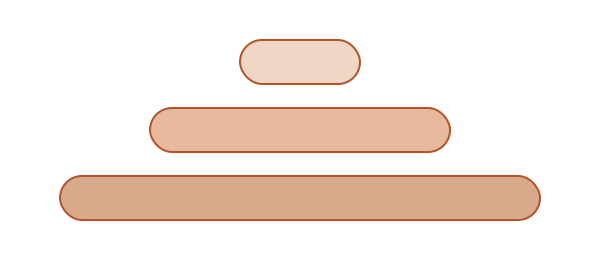
How the diagnosis widened. Schematic, not data. Each bar is the band of children the diagnosis covered: Kanner's small group in 1943 (top), the wider group after Wing's spectrum (middle), and the DSM-5 autism spectrum (bottom).
The rise in counted cases and its explanation come from a large review and standard histories.
How the diagnosis widened. Schematic, not data. Each bar is the band of children the diagnosis covered: Kanner's small group in 1943 (top), the wider group after Wing's spectrum (middle), and the DSM-5 autism spectrum (bottom).
Recognized in adults Emerging
The diagnosis is now understood as lifelong, and recognized in adults. Many autistic people receive a first diagnosis in adulthood, often after years of other diagnoses.28 Research on camouflaging and compensation is associated with missed and late diagnoses, and is thought to contribute to them.19
Autism is now understood as lasting for life. It is also recognized in adults. Many autistic people are first diagnosed as adults. Often they had other diagnoses for years first.28 Hiding autistic traits, which people call camouflaging, is linked to missed and late diagnoses. Scientists think it helps cause them.19
The diagnosis is documented as lifelong. The evidence on why so many adults were missed comes mainly from single, often cross-sectional studies.
We know the diagnosis lasts for life. But most studies of why adults were missed are small, single studies.
Asperger and the Nazi era Emerging
Am Spiegelgrund, in Vienna, was a children's clinic inside the Nazi child-euthanasia program. Children there were killed by starvation and lethal injection, and their deaths were recorded as pneumonia.20,21
Herwig Czech, a historian of medicine, worked from Vienna archives that included Asperger's personnel file and the assessments he wrote on his patients. Czech found that Asperger accommodated the Nazi regime, joined organizations affiliated with the party, publicly legitimized forced sterilizations, and on several occasions cooperated with the child-euthanasia program; his diagnostic language was often harsh.20 Edith Sheffer's book Asperger's Children, published the same year, reached a similar conclusion.21
Czech argues that the earlier, more sympathetic account of Asperger, including Steve Silberman's NeuroTribes in 2015, rested largely on statements Asperger made about himself and on a small part of his published work.20 NeuroTribes described him as having refused to report his young patients to the authorities.c2 In 2018 Silberman joined Simon Baron-Cohen, Ami Klin and Joseph Buxbaum in an editorial in the journal Molecular Autism. They wrote that they were persuaded by Czech's evidence that Asperger was complicit, and that they had earlier been unaware of his alliance with the Nazi sterilization and euthanasia programs.21 What writers still weigh differently is how much Asperger knew and intended.20,21
Am Spiegelgrund was a children's clinic in Vienna, in Nazi Austria. It was part of a program that killed children with disabilities. Children there died from starvation or from lethal injections. Their deaths were written down as pneumonia.20,21
Herwig Czech is a historian of medicine. He read old papers in Vienna. These included Asperger's staff file and the notes he wrote about his patients. Czech found that Asperger went along with the Nazi regime. Asperger joined groups linked to the Nazi party. He spoke up for forced sterilization. Several times, he helped send children toward the killing program. His notes about patients were often harsh.20 Edith Sheffer's book, Asperger's Children, came out the same year. It reached a similar view.21
Czech argues that the kinder, earlier picture of Asperger came mostly from what Asperger said about himself. That picture included Silberman's book NeuroTribes, from 2015.20 NeuroTribes described Asperger as refusing to report his young patients.c2 In 2018, Silberman wrote an editorial with Simon Baron-Cohen, Ami Klin and Joseph Buxbaum. They said Czech's evidence had persuaded them that Asperger shared the blame. They said they had not known before about his ties to the Nazi programs.21 People still disagree about how much Asperger knew and meant.20,21
The archival documents are on the record and are not in dispute. How to read Asperger's role is disputed, so this section reports the positions with dates and does not settle them.
The evidence is a paper trail of referrals, assessments and membership lists, not a record of intent. The 2018 archival work set aside the reading of Asperger as a protector, which had come mostly from his own account; the debate now is about how to weigh the documents.
The old papers are real and agreed on. How to read Asperger's part is still argued about. This section gives the different views and does not pick one.
The evidence is a trail of papers: referrals, notes and membership lists. It does not show what Asperger meant to do. The 2018 work set aside the idea that he protected children. That idea had come mostly from his own story. The argument now is about how to read the papers.
How the history has been used politically Established
The rise in diagnoses has repeatedly been described as an "epidemic".22,24 In 2025 the US Secretary of Health and Human Services claimed that prevalence estimates confirmed an autism epidemic driven by an environmental toxin. Researchers answered that changes in the definition of autism, in diagnostic criteria and practice, in case-finding and in awareness largely explain the measured rise, and that presenting it as an epidemic is misleading.22 In January 2026, Tara Eicher, John Quackenbush and Ari Ne'eman argued in the New England Journal of Medicine that the epidemic claims rest on misconceptions.26
Andrew Wakefield's 1998 paper in The Lancet suggested a link between the MMR vaccine and autism and set off a lasting crisis of confidence in the vaccine. The journal retracted the paper in 2010, after the UK General Medical Council found Wakefield dishonest.23 The pedia treats vaccine causation as settled against; the full account is in Contested causes.
Wright and McNally (2025) criticized the framing of autism as a crisis at the Kennedy hearings and called for disability justice in social work.24 Autistic advocates have turned the same history the other way, reading the record as showing that autism is old rather than a modern emergency.c3
People have often called the rise in diagnoses an "epidemic".22,24 In 2025, the US health secretary said the numbers proved an autism epidemic. He said a chemical in the environment caused it. Researchers answered that the rise comes mostly from changes in how autism is defined, found and counted. They said calling it an epidemic is misleading.22 In January 2026, three writers made the same point in a medical journal.26
In 1998, Andrew Wakefield wrote a paper linking the MMR vaccine to autism. Many parents became afraid of the vaccine. In 2010, the journal took the paper back. This followed a finding that Wakefield had been dishonest.23 The pedia treats it as settled that vaccines do not cause autism. The full story is in Contested causes.
Wright and McNally (2025) criticized the way autism was called a crisis at the Kennedy hearings. They asked social workers to work for disability justice.24 Autistic advocates use the same history in the other direction. They read it as showing that autism is old, not a new emergency.c3
These are dated claims by named bodies and writers, reported here as claims.
These are dated claims by named people and groups, reported here as claims.
In the community Community
Autistic people have their own history of the diagnosis, and it begins with them organizing. Autism Network International was founded by autistic people, among them Jim Sinclair, Kathy Lissner and Donna Williams. Sinclair wrote that "we called it a 'network,' not a 'community'", and that the first issue of the newsletter, Our Voice, appeared in November 1992.c1 Its aim was civil rights and self-determination for all autistic people, whatever the functioning label.c1
In 1993 Sinclair published "Don't Mourn for Us" in Our Voice, an answer to the idea that a diagnosis is a tragedy for parents: "Autism is a way of being... It is not possible to separate the person from the autism."c8
The word "neurotypical" was coined in the early 1990s, attributed independently to Judy Singer and Jim Sinclair.c5,c3
Autistic writers describe "autistic" as an identity rather than an affliction. Sinclair wrote that saying "person with autism" suggests that autism is something bad.c3 Many autistic writers reject functioning labels, which sort people by how independent they appear.c7 See Language and labels.
In 2007, the NYU Child Study Center ran a series of advertisements that read like ransom notes ("We have your son..."). Autistic self-advocates protested, and the ads were withdrawn.c3
Autistic writers tell the Asperger story in their own way. Toeps and Pearson and Rose draw on Sheffer and Czech to describe him as complicit in the Nazi regime, while Silberman's NeuroTribes had presented him more sympathetically.c4,c6,c2
Autistic people have their own history of this diagnosis. It starts with them coming together. Autistic people founded Autism Network International. They included Jim Sinclair, Kathy Lissner and Donna Williams. Sinclair wrote that they called it a "network", not a "community". The first newsletter, Our Voice, came out in November 1992.c1 Its goal was rights and self-determination for all autistic people, whatever their label.c1
In 1993, Sinclair wrote "Don't Mourn for Us" in Our Voice. It answered parents who felt a diagnosis was a tragedy. He wrote that autism "is a way of being". He said you cannot separate the person from the autism.c8
The word "neurotypical" was coined in the early 1990s. Two people are credited: Judy Singer and Jim Sinclair.c5,c3
Autistic writers describe "autistic" as part of who they are, not an illness. Sinclair wrote that "person with autism" makes autism sound bad.c3 Many autistic writers reject functioning labels. These labels sort people by how independent they seem.c7 See Language and labels.
In 2007, the NYU Child Study Center put up ads that looked like ransom notes. One said, "We have your son". Autistic people protested, and the ads were taken down.c3
Autistic writers tell the Asperger story their own way. Toeps, and Pearson and Rose, use Sheffer's and Czech's work to call him complicit. Silberman's NeuroTribes had painted a kinder picture.c4,c6,c2
How autistic people describe this history in their own writing. These are accounts and arguments, not research findings.
How autistic people describe this history in their own writing. These are accounts and arguments, not research findings.
Sources
Research
- 1Evans B. How autism became autism: The radical transformation of a central concept of child development in Britain. History of the Human Sciences, 2013;26(3):3–31. https://doi.org/10.1177/0952695113484320
- 2Pierucka M, Pakalska A, Zagożdżon P, Dydjow-Bendek D. The history of (not) understanding autism: From Hugh Blair and "The wild boy of Aveyron" to ICD-11 and the DSM-5-TR. History of Psychology, 2026;29(1):20–30. https://doi.org/10.1037/hop0000291
- 3Kuhn R, Cahn CH. Eugen Bleuler's concepts of psychopathology. History of Psychiatry, 2004;15(3):361–366. https://doi.org/10.1177/0957154X04044603
- 4Sher DA, Gibson JL. Pioneering, prodigious and perspicacious: Grunya Efimovna Sukhareva's life and contribution to conceptualising autism and schizophrenia. European Child & Adolescent Psychiatry, 2023;32(3):475–490. https://doi.org/10.1007/s00787-021-01875-7
- 5Manouilenko I, Bejerot S. Sukhareva—prior to Asperger and Kanner. Nordic Journal of Psychiatry, 2015;69(6):1761–1764. https://doi.org/10.3109/08039488.2015.1005022
- 6Pozzi CM, Riesgo RDS, Assumpção Junior FB. Revisiting the history of autism before Kanner and Asperger: a tribute to Grunya Sukhareva. Arquivos de Neuro-Psiquiatria, 2024;82(8):001–003. https://doi.org/10.1055/s-0044-1788269
- 7van Rosmalen L, van der Veer R, van der Horst FCP. The nature of love: Harlow, Bowlby and Bettelheim on affectionless mothers. History of Psychiatry, 2020;31(2):227–231. https://doi.org/10.1177/0957154X19898997
- 8Harris J. Leo Kanner and autism: a 75-year perspective. International Review of Psychiatry, 2018;30(1):3–17. https://doi.org/10.1080/09540261.2018.1455646
- 9Sasaki M, Kocha H. How did Leo Kanner distinguish early infantile autism from childhood schizophrenia? History of Psychiatry, 2025. https://doi.org/10.1177/0957154X251371358
- 10Vicedo M. Autism's heterogeneity in historical perspective: from challenge to opportunity. Frontiers in Psychology, 2023;14:1188053. https://doi.org/10.3389/fpsyg.2023.1188053
- 11Robison JE. Kanner, Asperger, and Frankl: A third man at the genesis of the autism diagnosis. Autism, 2017;21(7):862–871. https://doi.org/10.1177/1362361316654283
- 12Vicedo M, Ilerbaig J. Autism in Baltimore, 1938–1943. Journal of Autism and Developmental Disorders, 2021;51(4):1157–1172. https://doi.org/10.1007/s10803-020-04602-4
- 13Fellowes S. A history of childhood schizophrenia and lessons for autism. History and Philosophy of the Life Sciences, 2024;46(3). https://doi.org/10.1007/s40656-024-00627-5
- 14Morris-Rosendahl DJ, Crocq MA. Neurodevelopmental disorders—the history and future of a diagnostic concept. Dialogues in Clinical Neuroscience, 2020;22(1):65–72. https://doi.org/10.31887/DCNS.2020.22.1/macrocq
- 15Coutelle R, Coulon N, Schröder CM, Putois O. Investigating the borders of autism spectrum disorder: lessons from the former diagnosis of pervasive developmental disorder not otherwise specified. Frontiers in Psychiatry, 2023;14:1149580. https://doi.org/10.3389/fpsyt.2023.1149580
- 16Wing L. Asperger's syndrome: a clinical account. Psychological Medicine, 1981;11(1):115–129. https://doi.org/10.1017/S0033291700053332
- 17Rebecchi K. ¿Incluyó alguna vez el DSM el autismo de Asperger? Hacia una relectura del "síndrome de Asperger". Vertex Revista Argentina de Psiquiatría, 2025;36(169):55–61. https://doi.org/10.53680/vertex.v36i169.898
- 18Zeidan J, Fombonne E, Scorah J, et al. Global prevalence of autism: A systematic review update. Autism Research, 2022;15(5):778–790. https://doi.org/10.1002/aur.2696
- 19Lage LAS, Vasconconcelos-Moreno MP, Lemann RS, et al. Clinical constructs and historical insights of the autism spectrum disorder in adults. Trends in Psychiatry and Psychotherapy, 2026. https://doi.org/10.47626/2237-6089-2026-1309
- 20Czech H. Hans Asperger, National Socialism, and "race hygiene" in Nazi-era Vienna. Molecular Autism, 2018;9:29. https://doi.org/10.1186/s13229-018-0208-6
- 21Baron-Cohen S, Klin A, Silberman S, Buxbaum JD. Did Hans Asperger actively assist the Nazi euthanasia program? Molecular Autism, 2018;9:28. https://doi.org/10.1186/s13229-018-0209-5
- 22Fombonne E. The autism 'epidemic': misinterpretation, misinformation and conspiracy. European Journal of Epidemiology, 2025;40(9):981–994. https://doi.org/10.1007/s10654-025-01316-8
- 23Dyer C. Lancet retracts Wakefield's MMR paper. BMJ, 2010;340:c696. https://doi.org/10.1136/bmj.c696
- 24Wright K, McNally K. Manufacturing an "Autism Crisis": Critical reflections on the Kennedy hearings and a call for disability justice in social work. Journal of Evidence-Based Social Work, 2025;22(6):785–790. https://doi.org/10.1080/26408066.2025.2486134
- 25Verhoeff B. Autism in flux: a history of the concept from Leo Kanner to DSM-5. History of Psychiatry, 2013;24(4):442–458. https://doi.org/10.1177/0957154X13500584
- 26Eicher T, Quackenbush J, Ne'eman A. Challenging claims of an autism epidemic—misconceptions and a path forward. New England Journal of Medicine, 2026;394(4):313–315. https://doi.org/10.1056/nejmp2514250
- 27Tebartz van Elst L, Riedel A, Biscaldi-Schäfer M. The reclassification of neurodevelopmental disorders in ICD-11. Der Nervenarzt, 2025;96(S1):26–31. https://doi.org/10.1007/s00115-025-01876-w
- 28Dufour I, Chiu Y, Brodeur S, et al. Pathways to autism diagnosis in adulthood. Journal of Neurodevelopmental Disorders, 2025;17(1). https://doi.org/10.1186/s11689-025-09627-3
Community sources
- c1Bascom J, ed. Loud Hands: Autistic People, Speaking. The Autistic Press, 2012. Chapter "Historical Foundations" (Jim Sinclair). Julia Bascom's site
- c2Silberman S. NeuroTribes: The Legacy of Autism and the Future of Neurodiversity. Avery, 2015. Chapter "What Sister Viktorine Knew". Steve Silberman's site
- c3Silberman S. NeuroTribes: The Legacy of Autism and the Future of Neurodiversity. Avery, 2015. Chapter "In Autistic Space". Steve Silberman's site
- c4Toeps B. But You Don't Look Autistic at All. Self-published (English edition), 2020. Chapter "The diagnosis". Bianca Toeps's site
- c5Yergeau M. Authoring Autism: On Rhetoric and Neurological Queerness. Duke University Press, 2018. Chapter "Opening".
- c6Pearson A, Rose K. Autistic Masking: Understanding Identity Management and the Role of Stigma. Pavilion Publishing and Media, 2023. Chapter "The history of autism".
- c7Price D. Unmasking Autism: Discovering the New Faces of Neurodiversity. Harmony Books, 2022. Chapter "Stupid". Devon Price's site
- c8Sinclair J. Don't Mourn for Us. Our Voice (Autism Network International), 1993. https://www.autreat.com/dont_mourn.html