Cells and synapses
What brain tissue, brain chemistry and drug trials show about synapses, the mTOR pathway and the balance of excitation and inhibition in autism, and how much of it rests on mice.
What scientists know about the tiny parts of the brain where nerve cells connect, and about some drugs tested in autism. Much of it comes from mice, not people.
Spines and synapses Emerging
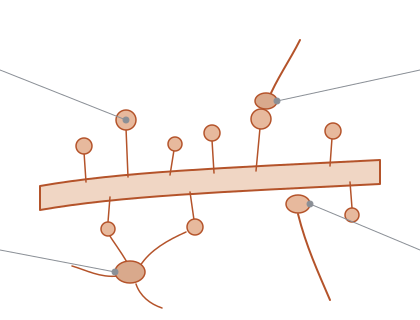
In typical development, the number of synapses in the human cortex peaks in infancy or early childhood and then falls, a process called pruning. Net loss runs through late childhood and into mid-adolescence,1 and in the prefrontal cortex spine loss continues into the third decade of life.2
Three small studies of brain tissue donated after death report more dendritic spines in autistic people than in non-autistic people: in frontal, temporal and parietal cortex,3 in the temporal lobe,4 and in the amygdala, in children and adolescents only.5 Each region rests on a single study. In the first, the highest spine densities went with lower brain weight and were most common in autistic people with lower cognitive scores.3
The most cited of these, by Tang and colleagues in 2014, counted spines in 10 autistic and 10 non-autistic brains aged about 2 to 20; the adolescent comparison was in males only. Spine density was slightly higher in the autistic children and clearly higher in the autistic adolescents. Between the childhood and adolescent groups, spine density fell by about 41 to 45% in the non-autistic tissue and by about 16% in the autistic tissue.4 The amygdala study, with usable data from 14 autistic and 13 non-autistic brains (from donors aged 7 to 46), found higher spine density under 18 and no difference in adults.5
Scans of living adults give a mixed picture. In one small sample, a PET study of 12 autistic adults (6 of them men) found synaptic density about 17% lower across the cortex than in 20 non-autistic adults, and lower density went with more autistic traits.6
This rests on three small post-mortem studies, in different regions and at different ages. One found no difference in adults. Scans of living autistic adults found fewer synapses in one small mixed-sex sample and no difference in one all-male sample; the samples are too small and too male to say anything about sex.3,4,5,6,7
Nerve cells pass messages at tiny joins called synapses. Babies and young kids make lots of them. Then the brain clears many away as kids grow up. This is called pruning.1 In the front of the brain, it goes on into a person's twenties.2
Some people give their brains to science after they die. Three small studies of these brains found more spines in some autistic people.3,4,5 Spines are tiny bumps where many synapses sit. Each study looked at a different part of the brain. In the first study, the most spines were in people with lighter brains and lower test scores.3
One study looked at 10 autistic and 10 non-autistic brains. They were from people aged about 2 to 20. The older group were all boys and men.4 In the non-autistic brains, spines went down by about 41 to 45 out of every 100 as kids grew older. In the autistic brains, they went down by about 16.4 Another study found more spines in the amygdala of autistic young people. It found no difference in adults.5
Brain scans of living adults do not agree. One small study found about 17 out of every 100 fewer synapses in autistic adults.6 Another, of 20 autistic men, found no difference.7
Three small post-mortem studies, each of a different brain region and none repeating another, report more spines. Two small scan studies of living adults disagree with each other.
A PET study of 20 autistic men without intellectual disability, taking no psychiatric medication, found no difference in synaptic density from 21 non-autistic men. Its authors note that most participants in the earlier study were taking such medication. Within their autistic group, higher synaptic density in the left anterior and medial temporal lobe went with more restricted and repetitive behavior, an exploratory finding not yet replicated and opposite in direction to the earlier study's correlation.7
A junction where one nerve cell passes a signal to another.
A tiny bump on a nerve cell's branches where most excitatory synapses sit. Counting spines is a way of estimating synapses in tissue.
A scan that tracks a weakly radioactive tracer in the body. The tracer used here binds to a protein found in synapses.
Only a few small studies have looked at this. They looked at different parts of the brain, and two brain scan studies disagree.
A tiny join where one nerve cell passes a message to another.
When the brain clears away connections it does not use, like trimming a bush.
A PET study of 20 autistic men without intellectual disability, taking no psychiatric medication, found no difference in synaptic density from 21 non-autistic men. Its authors note that most participants in the earlier study were taking such medication. Within their autistic group, higher synaptic density in the left anterior and medial temporal lobe went with more restricted and repetitive behavior, an exploratory finding not yet replicated and opposite in direction to the earlier study's correlation.7
mTOR in genetic syndromes Established
mTOR is a protein that acts as a hub inside cells: it takes in signals about the energy available and drives cell growth and the building of new proteins.8 The genes TSC1, TSC2 and PTEN normally hold it in check. Harmful changes in them cause tuberous sclerosis complex (TSC) and PTEN hamartoma tumor syndrome, in which mTOR is overactive.8,9
Autism is common in both. One meta-analysis found autistic traits in about 36% of people with TSC,10 and another found them in about 25% of people with a PTEN mutation, an estimate its authors say should be read cautiously.11 Among the children one clinic referred for PTEN testing, a selected group, 5 of 60 autistic children carried a mutation, and every carrier had a head size more than 2 standard deviations above average; the clinic's cohort was defined partly by large heads, so this link partly reflects who was tested.12 High rates of autism in these syndromes do not by themselves show that mTOR causes the autism, and blocking mTOR with everolimus did not change autistic traits in trials (see below).13,14
mTOR is a protein inside cells. It works like a control switch for growth.8 Three genes keep it from working too hard. When one of them is changed, mTOR works too hard. This causes conditions called TSC and PTEN syndrome.8,9
Autism is common in both. About 36 out of every 100 people with TSC are autistic.10 About 25 out of every 100 people with a PTEN change have autistic traits. The scientists say to treat that number with care.11 In one clinic, 5 of 60 autistic kids tested had a PTEN change. All of them had very large heads.12 This does not prove mTOR causes the autism. A drug that calms mTOR did not change autistic traits.13,14
Two meta-analyses find high rates of autism in the two best-known syndromes with an overactive mTOR pathway. The authors of the PTEN analysis say their figure may be biased.
Short for mechanistic target of rapamycin, a protein that controls cell growth. Its name comes from the drug that blocks it.
A genetic condition that causes benign growths in the brain and other organs, often with epilepsy.
Two big reviews of many studies found this. One review says its number may be a bit off.
Short for tuberous sclerosis complex. It is a genetic condition that causes harmless growths in the brain and body.
mTOR in autism more broadly Emerging
Outside these syndromes, findings point in different directions. In temporal-lobe tissue from 13 autistic and 16 comparison cases, Tang and colleagues found higher mTOR activity in the autistic adolescents (13 to 20), not in the younger children.4 A study of the fusiform gyrus, in 11 autistic and 13 comparison brains, all autism without a known cause, found lower levels of several proteins in the same pathway. Its authors suggest the pathway may be disturbed in either direction.15 Two studies of blood cells, from 41 and 33 autistic children, mostly boys aged 3 to 11, report higher activity in the pathway.16,17 They come from separate groups.
Outside TSC and PTEN syndrome, studies disagree. One study found mTOR working harder in autistic teenagers' brains.4 Another found the opposite in a different part of the brain.15 Two studies of blood found mTOR working harder in autistic kids.16,17 But blood cells are not brain cells.
A few small studies. Brain-tissue studies disagree on direction, and the blood studies measured blood cells rather than neurons.
A ridge on the underside of the brain involved in recognizing faces and objects.
There are only a few small studies, and they disagree. Some only looked at blood.
Autophagy, pruning and reversal in mice Hypothesis
In young mice carrying one faulty copy of the Tsc2 gene, mTOR was overactive, autophagy was blocked and fewer spines were pruned. Rapamycin, a drug that blocks mTOR, given from about 3 to 4 weeks of age restored pruning and social behavior. It did not do so in mice whose neurons could not carry out autophagy, and the authors concluded that autophagy in neurons is needed for this pruning.4
Separately, microglia engulf synaptic material and are needed for normal pruning in mice.18 Mice lacking autophagy in a family of immune cells that includes microglia had more spines and differences in social and repetitive behavior.19 These are findings about autophagy in two different kinds of cell, and neither study shows mTOR stopping microglia from pruning.4,19 The only human data on this chain are correlational: in Tang's post-mortem tissue, more spines went with overactive mTOR and lower autophagy markers.4
Rapamycin has also reversed some changes in adult mice. In adult mice with one faulty copy of Tsc2, a brief course restored synaptic plasticity and learning.20 A 2026 study used mice whose mothers were given a small dose of a bacterial toxin early in pregnancy to cause inflammation. In the adult offspring, a single dose of rapamycin reduced over-excitable neurons, seizure susceptibility, repetitive grooming and circling, and sensory over-responsiveness within 2 hours, and supplementary data show social interaction improving too.21 The effect was short-lived: repetitive behavior returned within 72 hours, and daily doses given for 5 weeks stopped working. The study did not measure dendritic spines or autophagy.21 Autism-like behavior in these mice means scores on animal tests, not traits a person would recognize.
Cells have a way to break down and recycle their old parts. It is called autophagy. In young mice with a changed TSC gene, autophagy was blocked. Fewer spines were pruned. A drug called rapamycin calms mTOR. It brought pruning and social behavior back to usual.4
In mice, the brain's own immune cells also help clear away synapses.18 Mice whose immune cells could not do autophagy had extra spines.19 These are two separate findings, in two kinds of cell.4,19 In people, there is only one small clue from brains after death.4
In some adult mice, rapamycin helped with learning.20 In a 2026 study, mouse mothers had a mild illness early in pregnancy. Their grown babies groomed and circled more than usual. A single dose of rapamycin helped within 2 hours.21 But the effect wore off within 3 days. Daily doses stopped working after about 5 weeks.21
Every causal step linking mTOR, autophagy and pruning, and every reversal with rapamycin, was shown in mice. The only human data on the chain are one small post-mortem correlation.
The way a cell breaks down and recycles its own worn-out parts. The word means self-eating.
The brain's resident immune cells.
A drug that blocks mTOR, used in medicine to suppress the immune system.
This idea comes from mice. In people, there is only one small clue.
The way a cell recycles its own worn-out parts. The word means self-eating.
Cells in the brain that clean up and fight germs.
Everolimus trials in people Established
Everolimus, a drug in the same family as rapamycin, has been tested for thinking and behavior in people with TSC.22 In a US trial of 47 children and young people aged 6 to 21, six months of everolimus did not improve neurocognition or behavior on nearly all measures.13 In a Dutch trial of 32 children aged 4 to 17 with a low IQ, a learning disability or autism (60 had been planned), twelve months of everolimus did not improve IQ or autistic traits.14 A Cochrane review found that everolimus shrinks TSC-related tumors and reduces seizures, though more people on it needed a lower dose or stopped; for thinking and behavior it found only one eligible trial, of 42 people, which showed no difference (low certainty).22 In a single trial of 46 people aged 5 to 45 with PTEN hamartoma tumor syndrome, the main outcome did not improve, while some secondary measures shifted slightly toward improvement, by small amounts that were not statistically significant.9
Everolimus is a drug like rapamycin.22 Two trials gave it to kids and young people with TSC. It did not help with thinking, learning or autistic traits.13,14 It does help shrink some TSC growths and cut seizures. But some people had to take less or stop.22 One trial in people with a PTEN change also found no clear help.9
Two independent placebo-controlled trials in children and young people with TSC agree that everolimus did not improve thinking or autistic traits. The PTEN result is a single trial, including adults up to 45.
A drug related to rapamycin that blocks mTOR, approved for some TSC tumors.
A study in which some people get the drug and others get a dummy, without knowing which.
Two careful trials by different teams agree. The drug did not help.
A test where some people get a drug and others get a fake pill. Nobody knows who got which.
The excitation/inhibition idea Hypothesis
In 2003, Rubenstein and Merzenich proposed that some forms of autism involve a raised ratio of excitation to inhibition in brain systems for sensation, memory, social behavior and emotion.23 A 2019 update by one of the original authors restates the idea in terms of reduced signal-to-noise in circuits, refines what the balance means, and proposes it as an organizing framework. Its evidence comes largely from mice carrying autism-linked gene changes.24
A 2022 review argues that the idea is hard to test. Researchers rarely say at which level they mean the balance (chemical messengers, single cells, local circuits or the whole brain), and there are no validated ways to measure it in people. It argues that using newer EEG markers of the balance in clinical groups is premature until their link to the underlying biology is understood.25
A raised ratio may also be the brain adjusting rather than the source of a difference. In four mouse models of autism, including Tsc2, the ratio of excitation to inhibition in somatosensory cortex was raised, mainly through weaker inhibition, but firing was largely normal; the authors read the shift as a compensating adjustment that keeps activity stable.26 A 2015 review argues that in many cases it is hard to separate an initial change in excitation or inhibition from the brain's compensation for it.27
Some brain signals tell the next cell to fire. These are "go" signals. Others tell it not to fire. These are "stop" signals. In 2003, two scientists had an idea. They thought some autistic people might have too many go signals.23 A later paper by one of them called it a way of thinking about the brain. Most of its proof came from mice.24
A 2022 review says the idea is hard to test. Scientists often do not say what they mean by balance. There is no proven way to measure it in people.25
In some mice, the balance did shift. But their nerve cells did not fire more than usual. The brain may have been adjusting to keep things steady.26,27
A proposed framework built mainly on animal studies. A 2022 review found no validated way to measure it in people.
Signals that make the next nerve cell more likely or less likely to fire.
This is an idea that some scientists use. Nobody has a good way to test it in people yet.
What human measures show Emerging
Magnetic resonance spectroscopy (MRS) can estimate levels of GABA and glutamate, the brain's main inhibitory and excitatory chemical messengers, in living people.28 Meta-analyses report lower GABA on average in autistic people.29,30,31 The earliest rested on 5 small studies with about 150 participants in total, autistic and comparison combined.29 In a 2024 meta-analysis the difference was significant in children but not in adults, and results varied with how studies were run. Few adult studies existed, and the authors caution that the age difference may reflect this.30 A 2023 meta-analysis also found higher glutamate in the prefrontal cortex and lower NAA, a chemical used as a marker of healthy neurons.31,30
Blood is a separate and more indirect index than brain tissue. A 2026 meta-analysis of blood studies, in about 800 autistic and 720 comparison participants, found higher glutamate and lower glutamine on average, but no clear difference in GABA, with very high heterogeneity between studies and very low certainty.44
Studies of autistic adults, each from a different group and each measuring different regions, disagree. One of 25 adults with an IQ of 80 or more found no change in GABA in the striatum or medial prefrontal cortex, and lower glutamate in the striatum.32 One of 29 young adults found no differences in visual, auditory or motor cortex, with statistics that favored no difference.28 One of 43 adults found higher GABA in the left dorsolateral prefrontal cortex.33
EEG and MEG offer another indirect measure: the slope of background brain activity, which some researchers read as a sign of the balance. In 49 boys aged 6 to 15, the slope was flatter only in autistic boys with an IQ below 85.34 A study of 63 autistic adolescents and adults found a flatter slope;35 a study of 35 autistic adults found at most a weak overall difference, with the autistic adults' slope steepening during an active task.36 The studies used different methods and conditions.
A special scan can measure brain chemicals in living people. One chemical, called GABA, sends stop signals.28 Reviews of many studies found less GABA in autistic people on average.29,30,31 This showed up in kids but not in adults. There were only a few adult studies.30 One review also found more of a go chemical in the front of the brain.31,30
A 2026 review looked at blood instead of the brain. It found more of the go chemical glutamate and less glutamine, a related chemical. It found no clear difference in GABA. The studies in the review disagreed a lot with each other.44
Studies of autistic adults disagree. One found no change in GABA.32 One found no differences at all.28 One found more GABA, not less.33
Brain wave tests give another clue. In one study, only autistic boys with lower IQ scores were different.34 Another study found a difference in autistic teens and adults.35 A third found only a small difference.36
Meta-analyses find lower GABA in some regions, mainly in children; adult studies find no difference or the opposite, so the picture is mixed. Most samples are mostly male. Blood studies are no clearer. EEG findings depend on who was studied.
In a sex-balanced sample, unusual among these studies, an EEG measure sorted 164 autistic young people into three groups: a typical balance, more excitation, and more inhibition. The two groups with an imbalance differed in their traits.37
A 2022 review notes that MRS covers only a limited area of the brain, and that no human measure of excitation and inhibition has yet been validated.25
A form of MRI scan that measures the amount of certain chemicals in a block of brain tissue.
The brain's main inhibitory chemical messenger.
Recordings of the brain's electrical and magnetic activity from sensors on or near the scalp.
Some studies agree, and others disagree. Most people tested were boys and men. Blood studies are no clearer.
A brain chemical that tells nerve cells to slow down.
In a sex-balanced sample, unusual among these studies, an EEG measure sorted 164 autistic young people into three groups: a typical balance, more excitation, and more inhibition. The two groups with an imbalance differed in their traits.37
Bumetanide trials in people Emerging
Bumetanide, a diuretic, lowers chloride inside neurons, which is meant to strengthen inhibition through GABA.38 Two early trials by one French research group, in 60 and 88 children, reported improvement, partly in analyses of subgroups or of those who completed treatment.38,39 A group in Shanghai reported benefit in a placebo-controlled trial of 119 children aged 3 to 6, mostly with moderate to severe autism, on the Childhood Autism Rating Scale, and its authors say the clinical significance remains uncertain.40 The same group reported benefit in a trial of 83 young children in which the comparison group received neither bumetanide nor a placebo. The two trials come from one group and count as one line of evidence.41
An independent trial of 92 children aged 7 to 15 in the Netherlands found no effect on its main outcome; one of three secondary measures, repetitive behavior, improved, a finding not yet repeated, and low potassium occurred in 51% of children on bumetanide.42 Two larger trials run by one company, of 211 children each (aged 7 to 17 and 2 to 6), were stopped early because bumetanide did no better than placebo on any outcome, and the company ended its development for autism. The senior author of the 2012 French trial is the senior author of the report on these trials.43,38
Two meta-analyses published in 2026 pool these trials. Both report a small short-term improvement on the Childhood Autism Rating Scale in children and adolescents, significant at three months but not at six, with high heterogeneity between studies.45,46 One rates the certainty of the evidence low to very low;46 the other reports improvement on a clinician-rated global impression but no significant benefit on the Social Responsiveness Scale-2 and inconsistent results on repetitive behavior depending on the tool, and finds the improvement on the rating scale below the 4.5-point change its authors treat as clinically important.45
Bumetanide is a drug that makes people pee more. Scientists hoped it would make stop signals stronger.38 One team in France said it helped.38,39 One team in China also said it helped young kids. Even they say they are not sure how much it helped.40,41
Then a team in the Netherlands tested it in 92 kids. It did not help on the main test.42 Two bigger trials were stopped early because it did not help at all.43
In 2026, two reviews put all these trials together. They found a small, short-term improvement on one test in children and teens. The benefit showed at 3 months but not at 6. But the studies were very different from each other, and the reviews were not sure it really helps.45,46
Trials disagree. The largest placebo-controlled trials and an independent Dutch trial found no benefit; smaller trials from two groups report a small benefit in young children on one rating scale, and two 2026 meta-analyses find a similar small, short-term benefit in children and adolescents, one of them rating the evidence as low-certainty.
A diuretic, a drug that makes the kidneys pass more water and salt.
Trials disagree. The biggest trials found it did not help. Two reviews found only a small, uncertain, short-term effect on one test.
In the community Community
Synaptic pruning is a cellular idea that autistic writers often use. Devon Price describes typical development as "a process of slowly pruning unhelpful connections", and writes that in autistic brains some regions stay hyperconnected throughout life while others are relatively underconnected; Price cites researchers who describe autistic development and pruning as "disrupted".c1
Sol Smith builds a whole explanation of autism on pruning. Smith writes that autistic people have underactive mirror neurons, and proposes that a brain out of step with the people around it cannot tell which synapses to prune; Smith says plainly that no study has drawn this conclusion.c2 In a later chapter Smith writes that while other children trim unused pathways to match the people around them, "we tend to just leave a bunch there, resulting in a Seussian train yard with interchanges that aren't immediately efficient."c3 Smith uses the same idea to explain why some autistic people use their native language "more like a second language", choosing words for their literal meaning.c4
Smith also writes that autistic brains have more synaptic connections, "11 percent more is the number usually found in postmortem brain comparisons".c5 Nick Walker, an autistic scholar of the neurodiversity paradigm, writes that the central difference is that autistic brains are "characterized by particularly high levels of synaptic connectivity and responsiveness", so that each piece of information lands harder and less predictably.c6 The research above is less settled. Three small post-mortem studies, each of a different brain region, report more dendritic spines, one of them only before adulthood, and scans of living adults found fewer synapses in one small study and no difference in another. The often-said box above covers the claim that autistic brains do not prune. The link from mirror neurons to pruning is Smith's own hypothesis; the research sections above do not cover mirror neurons.
Some autistic writers talk about pruning. Pruning is how a growing brain trims away links it does not use. Devon Price says some parts of autistic brains keep extra links all through life.c1
Sol Smith builds a whole idea of autism on pruning. Smith thinks autistic brains do not copy the people around them as much. So the brain cannot tell which links to trim.c2 Smith says no study has shown this. Smith pictures the leftover links as a messy train yard.c3 Smith also says this is why some autistic people use their own language like a second language.c4
Smith writes that autistic brains have about 11% more links.c5 Nick Walker, an autistic scholar, also writes that autistic brains have extra links. Walker says this makes each thing you sense hit harder.c6 The research above is less sure. Three small studies of donated brains found more spines, in different places. Brain scans of living adults found fewer links in one study and no difference in another.
How autistic writers use the ideas of synaptic pruning and extra synapses. These are descriptions and arguments, not research findings.
This is how autistic writers use the idea. It is not a research finding.
Sources
Research
- 1Huttenlocher PR, Dabholkar AS. Regional differences in synaptogenesis in human cerebral cortex. The Journal of Comparative Neurology, 1997. https://pubmed.ncbi.nlm.nih.gov/9336221/
- 2Petanjek Z, Judaš M, Šimić G, et al. Extraordinary neoteny of synaptic spines in the human prefrontal cortex. Proceedings of the National Academy of Sciences, 2011. https://doi.org/10.1073/pnas.1105108108
- 3Hutsler JJ, Zhang H. Increased dendritic spine densities on cortical projection neurons in autism spectrum disorders. Brain Research, 2010. https://doi.org/10.1016/j.brainres.2009.09.120
- 4Tang G, Gudsnuk K, Kuo SH, et al. Loss of mTOR-dependent macroautophagy causes autistic-like synaptic pruning deficits. Neuron, 2014. https://doi.org/10.1016/j.neuron.2014.07.040
- 5Weir RK, Bauman MD, Jacobs B, et al. Protracted dendritic growth in the typically developing human amygdala and increased spine density in young ASD brains. Journal of Comparative Neurology, 2018. https://doi.org/10.1002/cne.24332
- 6Matuskey D, Yang Y, Naganawa M, et al. 11C-UCB-J PET imaging is consistent with lower synaptic density in autistic adults. Molecular Psychiatry, 2025. https://doi.org/10.1038/s41380-024-02776-2
- 7Yokokura M, Tamayama T, Kameno Y, et al. In vivo imaging of synaptic density in psychotropic-free adults with autism spectrum disorder: a [11C]UCB-J PET study. Molecular Psychiatry, 2026. https://doi.org/10.1038/s41380-026-03812-z
- 8Winden KD, Ebrahimi-Fakhari D, Sahin M. Abnormal mTOR activation in autism. Annual Review of Neuroscience, 2018. https://doi.org/10.1146/annurev-neuro-080317-061747
- 9Srivastava S, Jo B, Zhang B, et al. A randomized controlled trial of everolimus for neurocognitive symptoms in PTEN hamartoma tumor syndrome. Human Molecular Genetics, 2022. https://doi.org/10.1093/hmg/ddac111
- 10Richards C, Jones C, Groves L, et al. Prevalence of autism spectrum disorder phenomenology in genetic disorders: a systematic review and meta-analysis. The Lancet Psychiatry, 2015. https://doi.org/10.1016/S2215-0366(15)00376-4
- 11Cummings K, Watkins A, Jones C, et al. Behavioural and psychological features of PTEN mutations: a systematic review of the literature and meta-analysis of the prevalence of autism spectrum disorder characteristics. Journal of Neurodevelopmental Disorders, 2022. https://doi.org/10.1186/s11689-021-09406-w
- 12Varga EA, Pastore M, Prior T, et al. The prevalence of PTEN mutations in a clinical pediatric cohort with autism spectrum disorders, developmental delay, and macrocephaly. Genetics in Medicine, 2009. https://doi.org/10.1097/GIM.0b013e31818fd762
- 13Krueger DA, Sadhwani A, Byars AW, et al. Everolimus for treatment of tuberous sclerosis complex-associated neuropsychiatric disorders. Annals of Clinical and Translational Neurology, 2017. https://doi.org/10.1002/acn3.494
- 14Overwater IE, Rietman AB, Mous SE, et al. A randomized controlled trial with everolimus for IQ and autism in tuberous sclerosis complex. Neurology, 2019. https://doi.org/10.1212/WNL.0000000000007749
- 15Nicolini C, Ahn Y, Michalski B, et al. Decreased mTOR signaling pathway in human idiopathic autism and in rats exposed to valproic acid. Acta Neuropathologica Communications, 2015. https://doi.org/10.1186/s40478-015-0184-4
- 16Onore C, Yang H, Van de Water J, et al. Dynamic Akt/mTOR signaling in children with autism spectrum disorder. Frontiers in Pediatrics, 2017. https://doi.org/10.3389/fped.2017.00043
- 17Rosina E, Battan B, Siracusano M, et al. Disruption of mTOR and MAPK pathways correlates with severity in idiopathic autism. Translational Psychiatry, 2019. https://doi.org/10.1038/s41398-018-0335-z
- 18Paolicelli RC, Bolasco G, Pagani F, et al. Synaptic pruning by microglia is necessary for normal brain development. Science, 2011. https://doi.org/10.1126/science.1202529
- 19Kim HJ, Cho MH, Shim WH, et al. Deficient autophagy in microglia impairs synaptic pruning and causes social behavioral defects. Molecular Psychiatry, 2017. https://doi.org/10.1038/mp.2016.103
- 20Ehninger D, Han S, Shilyansky C, et al. Reversal of learning deficits in a Tsc2+/- mouse model of tuberous sclerosis. Nature Medicine, 2008. https://doi.org/10.1038/nm1788
- 21Le Belle JE, Condro MC, Cepeda C, et al. Acute rapamycin treatment reveals distinct mechanisms of dysfunction in a maternal inflammation mouse model. Nature Communications, 2026. https://doi.org/10.1038/s41467-026-74958-1
- 22Sasongko TH, Kademane K, Chai Soon Hou S, et al. Rapamycin and rapalogs for tuberous sclerosis complex. Cochrane Database of Systematic Reviews, 2023. https://doi.org/10.1002/14651858.CD011272.pub3
- 23Rubenstein JLR, Merzenich MM. Model of autism: increased ratio of excitation/inhibition in key neural systems. Genes, Brain and Behavior, 2003. https://doi.org/10.1034/j.1601-183x.2003.00037.x
- 24Sohal VS, Rubenstein JLR. Excitation-inhibition balance as a framework for investigating mechanisms in neuropsychiatric disorders. Molecular Psychiatry, 2019. https://doi.org/10.1038/s41380-019-0426-0
- 25Ahmad J, Ellis C, Leech R, et al. From mechanisms to markers: novel noninvasive EEG proxy markers of the neural excitation and inhibition system in humans. Translational Psychiatry, 2022. https://doi.org/10.1038/s41398-022-02218-z
- 26Antoine MW, Langberg T, Schnepel P, et al. Increased excitation-inhibition ratio stabilizes synapse and circuit excitability in four autism mouse models. Neuron, 2019. https://doi.org/10.1016/j.neuron.2018.12.026
- 27Nelson SB, Valakh V. Excitatory/inhibitory balance and circuit homeostasis in autism spectrum disorders. Neuron, 2015. https://doi.org/10.1016/j.neuron.2015.07.033
- 28Kolodny T, Schallmo MP, Gerdts J, et al. Concentrations of cortical GABA and glutamate in young adults with autism spectrum disorder. Autism Research, 2020. https://doi.org/10.1002/aur.2300
- 29Schür RR, Draisma LWR, Wijnen JP, et al. Brain GABA levels across psychiatric disorders: a systematic literature review and meta-analysis of 1H-MRS studies. Human Brain Mapping, 2016. https://doi.org/10.1002/hbm.23244
- 30Thomson AR, Pasanta D, Arichi T, et al. Neurometabolite differences in autism as assessed with magnetic resonance spectroscopy: a systematic review and meta-analysis. Neuroscience and Biobehavioral Reviews, 2024. https://doi.org/10.1016/j.neubiorev.2024.105728
- 31Du Y, Chen L, Yan MC, et al. Neurometabolite levels in the brains of patients with autism spectrum disorders: a meta-analysis of proton magnetic resonance spectroscopy studies (N = 1501). Molecular Psychiatry, 2023. https://doi.org/10.1038/s41380-023-02079-y
- 32Horder J, Petrinovic MM, Mendez MA, et al. Glutamate and GABA in autism spectrum disorder: a translational magnetic resonance spectroscopy study in man and rodent models. Translational Psychiatry, 2018. https://doi.org/10.1038/s41398-018-0155-1
- 33Maier S, Düppers AL, Runge K, et al. Increased prefrontal GABA concentrations in adults with autism spectrum disorders. Autism Research, 2022. https://doi.org/10.1002/aur.2740
- 34Manyukhina VO, Prokofyev AO, Galuta IA, et al. Globally elevated excitation-inhibition ratio in children with autism spectrum disorder and below-average intelligence. Molecular Autism, 2022. https://doi.org/10.1186/s13229-022-00498-2
- 35Chien YL, Hsieh MH, Hsieh YH, et al. Altered spectral patterns of aperiodic electroencephalography in autism. Psychiatry and Clinical Neurosciences, 2026. https://doi.org/10.1111/pcn.70044
- 36Matyjek M, Faraco SS, Martin CA, et al. Task-related aperiodic EEG (1/f) activity in autism. Autism Research, 2026. https://doi.org/10.1002/aur.70314
- 37Arutiunian V, Sullivan CAW, Santhosh M, et al. Excitation/inhibition balance subtypes in autism and their genetic, neural, and clinical profiles. Journal of Neural Transmission, 2026. https://doi.org/10.1007/s00702-026-03283-0
- 38Lemonnier E, Degrez C, Phelep M, et al. A randomised controlled trial of bumetanide in the treatment of autism in children. Translational Psychiatry, 2012. https://doi.org/10.1038/tp.2012.124
- 39Lemonnier E, Villeneuve N, Sonie S, et al. Effects of bumetanide on neurobehavioral function in children and adolescents with autism spectrum disorders. Translational Psychiatry, 2017. https://doi.org/10.1038/tp.2017.10
- 40Dai Y, Zhang L, Yu J, et al. Improved symptoms following bumetanide treatment in children aged 3-6 years with autism spectrum disorder: a randomized, double-blind, placebo-controlled trial. Science Bulletin, 2021. https://doi.org/10.1016/j.scib.2021.01.008
- 41Zhang L, Huang CC, Dai Y, et al. Symptom improvement in children with autism spectrum disorder following bumetanide administration is associated with decreased GABA/glutamate ratios. Translational Psychiatry, 2020. https://doi.org/10.1038/s41398-020-0692-2
- 42Sprengers JJ, van Andel DM, Zuithoff NPA, et al. Bumetanide for core symptoms of autism spectrum disorder (BAMBI): a single center, double-blinded, participant-randomized, placebo-controlled, phase-2 superiority trial. Journal of the American Academy of Child and Adolescent Psychiatry, 2021. https://doi.org/10.1016/j.jaac.2020.07.888
- 43Fuentes J, Parellada M, Georgoula C, et al. Bumetanide oral solution for the treatment of children and adolescents with autism spectrum disorder: results from two randomized phase III studies. Autism Research, 2023. https://doi.org/10.1002/aur.3005
- 44Shi Y, Yin X, Luo J, et al. Peripheral blood glutamate, glutamine, and GABA in autism spectrum disorder: a systematic review and meta-analysis of group differences with an exploratory assessment of diagnostic accuracy. Progress in Neuro-Psychopharmacology & Biological Psychiatry, 2026. https://doi.org/10.1016/j.pnpbp.2026.111926
- 45Hendi NI, Almosilhy NA, Mohammed OH, et al. The efficacy and safety of bumetanide in children with autism spectrum disorder: an updated meta-analysis. European Child & Adolescent Psychiatry, 2026. https://doi.org/10.1007/s00787-025-02890-8
- 46Rehman AU, Garg A, Khan MA. Efficacy and safety of bumetanide in children with autism spectrum disorder: a systematic review and meta-analysis. Reviews on Recent Clinical Trials, 2026. https://doi.org/10.2174/0115748871407264251209141124
Community sources
- c1Price D. Unmasking Autism: Discovering the New Faces of Neurodiversity. Harmony Books, 2022. Chapter 1, "What Is Autism, Really?", section "Defining Autism". Devon Price's site
- c2Smith S. The Autistic's Guide to Self-Discovery: Flourishing as a Neurodivergent Adult. New World Library, 2025. Chapter 3, "Okay, So What Is Autism?", section "Holding a Mirror to the Brain". Sol Smith's site
- c3Smith S. The Autistic's Guide to Self-Discovery: Flourishing as a Neurodivergent Adult. New World Library, 2025. Chapter 4, "We Have Our Differences in Common", section "Socialization Differences". Sol Smith's site
- c4Smith S. The Autistic's Guide to Self-Discovery: Flourishing as a Neurodivergent Adult. New World Library, 2025. Chapter 4, "We Have Our Differences in Common", section "Communication Challenges". Sol Smith's site
- c5Smith S. The Autistic's Guide to Self-Discovery: Flourishing as a Neurodivergent Adult. New World Library, 2025. Chapter 3, "Okay, So What Is Autism?", section "The Energy Cost". Sol Smith's site
- c6Walker N. Neuroqueer Heresies: Notes on the Neurodiversity Paradigm, Autistic Empowerment, and Postnormal Possibilities. Autonomous Press, 2021. Part II, "Autistic Empowerment", chapter "What Is Autism?". Nick Walker's site