Sensory processing and prediction
How common sensory differences are in autism, what the prediction, thalamus and arousal theories propose, how those theories have fared when tested, and what is known about the link between sensory differences and anxiety.
Many autistic people sense the world differently. This page covers how common that is, what scientists think might be going on in the brain, and what tests of those ideas have found. It also covers how sensory differences and worry are linked.
How common sensory differences are Established
Differences in how people respond to sound, touch, light, taste, smell and movement are part of the diagnostic criteria for autism.5,1 A meta-analysis of 55 questionnaire studies, covering 4,606 autistic people, found large differences from non-autistic people in over-responsivity (strong or negative reactions), under-responsivity (little or slow reaction) and sensory seeking, with wide variation between studies. Compared with groups with other developmental conditions, over-responsivity and seeking were higher in autism; compared with other clinical groups, only over-responsivity was. For seeking, the size of the difference from non-autistic people depended on age, IQ and whether people rated themselves.2
In one study of the records of 25,627 autistic children aged 4 or 8 in a US monitoring network (2006 to 2014), 74% had sensory features written down.1 They were recorded less often for girls, for children from several racial and ethnic minority groups and for children whose mothers had fewer years of education, which the authors suggest may reflect differences in how often these features are noticed.1
Adults report the same. In one small study, 94.4% of autistic adults scored at an extreme level on at least one sensory pattern of a self-report questionnaire, and the patterns differed a great deal from person to person.3 In two online surveys from one research group, autistic adults reported more over-responsivity than non-autistic adults across the senses.4,5
Over-responsivity is not specific to autism. In a Finnish birth cohort of 4,424 eight-year-olds, parents reported it in 6.4% of children. It was most strongly linked to autism, and also to ADHD traits, motor difficulties and other developmental conditions, all reported by parents.6
Some people react to sounds, touch, light, tastes or smells more than others do. Doctors count these differences as one sign of autism.5,1
Scientists combined 55 studies of 4,606 autistic people. Autistic people were much more likely to react strongly to sensations. They were also more likely to barely notice them, or to seek them out.2 Compared with other conditions, the strong reactions stood out most.2
One big study checked the records of over 25,000 autistic kids. About 3 in 4 had sensory differences written down.1 Girls had them written down less often. So did kids from some minority groups. The scientists think this may be about who gets noticed.1
Autistic adults say the same thing about themselves.3,4,5 People with other conditions, like ADHD, can react strongly too.6
A meta-analysis of 55 questionnaire studies supports the group difference. The 74% figure and the adult figures each come from a single study, and the adult surveys come from one research group.
Reacting more strongly, or more negatively, than most people to ordinary sensations. Often shortened to SOR.
Many studies agree on this, so we can be fairly sure. Most of them asked people to fill in forms.
Reacting more strongly than most people to everyday sensations, like a scratchy label or a loud hand dryer.
What the theories propose Hypothesis
Several theories treat the brain as a prediction machine that compares what it expects with what arrives. One proposal holds that autistic people rely less on prior expectations ("hypo-priors"), so perception is less shaped by past experience.7 The "aberrant precision" account suggests that sensory evidence is given too much weight compared with prior beliefs.8 A third, called HIPPEA, holds that prediction errors are given high weight that does not adjust to the situation. Its authors suggest that insistence on sameness would then be a way of getting a sense of predictive success in a world full of errors.9 Another group has argued that difficulty predicting makes events seem to happen without cause, which could be overwhelming.10 Not all theories are about prediction. Others propose too much excitation relative to inhibition in sensory and other brain systems, stronger low-level perception that runs more independently of higher-level processing, or an altered time window for binding signals from different senses (also proposed for dyslexia and schizophrenia).60,61,62 This entry follows the prediction, filtering and arousal accounts.
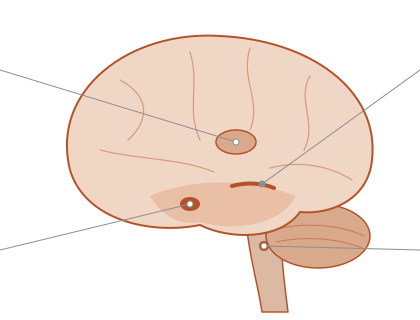
Other proposals look at filtering and arousal. The "leaky thalamus" idea, that unimportant sensory signals pass through the thalamus and become distracting, grew out of work in mice.12 In male mice, deleting one gene, Ptchd1, only in the thalamic reticular nucleus, which helps control what the thalamus passes on, weakened its activity and produced attention problems and hyperactivity. Deleting it throughout the body caused learning, aggression and movement problems as well, while basic sensory responses such as startle were normal.11 Another proposal holds that the locus coeruleus, which sets the brain's arousal level, is more active at rest and less responsive to events in autistic children, which would change how attention is drawn to things.13
For anxiety, a 2010 review set out three possibilities: anxiety causes sensory over-responsivity, over-responsivity causes anxiety, or both share a cause or overlap in how they are diagnosed.14 A 2025 review proposes a chain from differences in infant sensory filtering to over-responsivity, autistic traits and anxiety.15 Neither review extends this to prediction differences or to social avoidance. The evidence on these links is in the last two sections.
Your brain is always guessing what will happen next. Then it checks the guess against what your senses pick up.
Some scientists think autistic brains lean less on their guesses.7 Others think they trust the senses too much compared with the guesses.8 Another idea is that surprises always count a lot. Liking sameness might then be a way to have fewer surprises.9 One more idea is that the world feels hard to predict, which could be overwhelming.10 Other ideas are not about guessing at all. They are about brain signals being too strong, or about how the senses work together.60,61,62
The thalamus is a relay station deep in the brain. One idea calls it "leaky": unimportant signals slip through it.12 This idea came from a study in mice, not people. Those mice had attention problems, but their basic senses worked normally.11
Another idea is about a tiny brain part that sets how alert you are. Some scientists think it runs high all the time in autistic kids.13
Does worry come from sensory differences? Scientists have listed three options. Sensory differences might cause worry. Worry might cause sensory differences. Or something else might cause both.14,15
These are proposed explanations. Each is built from other findings and computer models, and none has been confirmed directly. The next sections give the tests.
The brain's expectation about what it is about to sense, built from past experience.
The gap between what the brain expected and what actually arrived.
These are ideas, not facts. Scientists built them from other clues. The next sections show how the tests went.
The brain's guess about what it is about to see, hear or feel.
Testing the prediction theories Emerging
A systematic review of 47 studies found differences in learning which events predict which, and in how responses fade with repetition.16 A review of studies testing the "weaker priors" idea found the results highly mixed: a slight majority found no difference in how priors are used, priors learned during an experiment were the ones more often found weaker, and many studies were too small to tell.17 A meta-analysis of 23 studies found a small-to-moderate effect in the predicted direction, but the studies varied widely for reasons it could not explain, and its authors called the support limited.18
Several direct tests did not find the predicted difference. Priors were intact for judging where a face is looking, in autistic adults without intellectual disability, and for reading shading as lit from above, in 18 autistic children matched to other children on age and ability.19,20 In 34 cognitively able autistic children aged 6 to 14, learning sped up in a changing environment, and no difference from other children was detected.21 In one study of 26 autistic adults, reported in two papers, predictions were learned and updated as well as in non-autistic adults, although some brain measures in the same people differed.22,23
Other tests found differences, of varying kinds. In one study of 24 autistic adults, they were less surprised than others when expectations were broken; a model suggested they treated the environment as more changeable, and in the autistic group pupil size tracked this modeled surprise.24 In another, autistic participants gave less weight to the most recent stimuli and relied more on longer-term patterns.25 A re-analysis of two earlier datasets found normal use of priors in 29 autistic young adults lifting objects, but less flexible learning in the eye movements of 17 autistic participants, and no sign that autistic people treat the world as constantly changing.26
Brain-wave measures of surprise give no clearer picture. Four meta-analyses of the mismatch negativity, a response to an unexpected sound, drew on many of the same studies. They report no overall difference (with smaller responses in young children and to non-speech sounds), a smaller response to speech sounds, a smaller response in children but a larger one in adults in some designs, and no significant difference in oddball tasks.27,28,29,30 One fMRI study, in a small all-male sample of 16 autistic men left after 12 of 28 were excluded for poor task performance, found that signals for other people's prediction errors in the anterior cingulate cortex differed and went with differences in social interaction.31
Scientists have run many tests of these ideas. When they put the results together, the answers were mixed.16,17,18
In several tests, autistic people used their guesses just like other people.19,20,21,22,23 In others, there were differences. In one study, autistic adults seemed less surprised when their guesses were wrong.24 Some were slower to update their guesses.25,26
Scientists also measure brain waves when a surprise sound plays. Studies of this do not agree with each other.27,28,29,30 One small brain scan study looked at guessing what other people would do. It found a difference there.31
Many direct tests exist, but they disagree. Two systematic reviews and a meta-analysis describe the results as mixed. Most studies are small and mostly male, and most tested people without an intellectual disability.
A brain-wave response, recorded from the scalp, that appears when a sound breaks a repeating pattern.
Many tests have been done, but they disagree. Most were small.
Sensory gating and the thalamus Emerging
Sensory gating is the brain's damping of a repeated or expected signal. A meta-analysis of 7 studies (99 autistic participants) found weaker gating of the startle reflex in autistic children and adolescents, but not in adults.32 A 2026 review of 44 studies, whose participants were about 80% male with an average age of 15.6, pooled the measures with enough comparable studies. Startle gating was preserved, with consistent results. The brain response to the first of two clicks was smaller, and results for most measures varied widely.33 Single studies found normal click gating in 12 autistic children without intellectual disability, and a difference in a later gating response but not the earliest one in 34 mostly male adolescents and young adults.34,35
The thalamus relays most sensory signals to the cortex. Studies of how strongly it is connected to the cortex in autism disagree on both direction and location.36 One study of children and adolescents found weaker thalamic connections with four of five cortical regions tested; connections with the temporal lobe looked stronger only in one type of analysis.37 Two analyses of the same large shared dataset found stronger connectivity: with primary sensory networks in the first, which included only males, and with prefrontal, temporal and sensorimotor cortex in the second.38,39 Two later studies, one with careful control of head movement and one small study comparing autism with ADHD, also found stronger connectivity with temporal or sensorimotor cortex.36,12
In infants with an autistic older sibling, thalamic connections with emotion-related regions were stronger at 6 weeks, and those with prefrontal and motor regions weaker at 9 months. Infants with more early over-responsivity had stronger thalamic links with sensory areas and the basal ganglia, and weaker ones with higher-order cortex.40
The brain usually turns down a sound it has just heard. This is called gating. Some studies found less gating in autistic kids. Bigger reviews found it mostly works as usual.32,33,34,35
Scientists also look at how the thalamus links up with the rest of the brain. Some studies found weaker links. More found stronger ones. They do not agree on where.36,37,38,39,12
One study scanned babies who had an autistic older brother or sister. Babies who reacted more strongly to sensations had different thalamus links.40
Gating studies are small and disagree. Thalamus studies disagree on direction, and two of the larger ones used the same shared dataset. None directly measures the thalamus filtering sensory input.
A pair of egg-shaped structures deep in the brain that relay signals from the senses to the cortex.
"Connectivity" here means how closely activity in two regions rises and falls together during a scan. Small head movements, the analysis method and the age of the sample all change the answer, which is part of why studies point in different directions.36
These studies are small, and they disagree.
A pair of egg-shaped parts deep in the brain. They pass signals from the senses on to the rest of the brain.
Brain responses in over-responsivity Emerging
In brain scans by one research group, autistic youth responded more strongly than non-autistic youth to mildly unpleasant sounds, touch and images, in sensory cortex and in the amygdala. The size of these responses went with parent-rated over-responsivity, even after anxiety was taken into account.41,42 When 19 autistic youth were split by over-responsivity, those with it showed less fading of the response with repetition, while those without it showed a pattern in which the orbitofrontal cortex appeared to damp the amygdala.42
In the same sample, connectivity between the pulvinar, part of the thalamus, and the amygdala went with how severe over-responsivity was.43 In a further study of 35 autistic and 35 non-autistic youth, the level of GABA, the brain's main inhibitory chemical messenger, which damps activity, in the thalamus did not differ between groups; within the autistic group, lower thalamic GABA went with more parent-rated over-responsivity. Among the 20 autistic participants with usable data, higher glutamate and glutamine, which drive activity, in somatosensory cortex also went with more over-responsivity.44
Autistic youth also showed larger skin-conductance responses and higher resting heart rate, and heart-rate responses went with over-responsivity.45 Youth with anxiety disorders showed similarly heightened brain responses to the same stimuli, while over-responsivity and anxiety had different physical signatures.46
One team scanned the brains of autistic kids and teens. They used mildly unpleasant sounds, touch and pictures. Some autistic kids' brains reacted more strongly than other kids' brains.41,42 The amygdala, which helps with feelings, reacted more too.41,42
Kids who react strongly to sensations did not get used to the sounds as quickly.42 In autistic kids who reacted strongly, part of the thalamus was more linked with the amygdala.43 A calming brain chemical in the thalamus was lower in kids who reacted more strongly.44
Autistic kids' hearts also beat faster at rest.45 Kids with worry problems had similar brain reactions. But their bodies reacted in a different way.46
Every study here comes from one research group in Los Angeles, with 8- to 18-year-olds without intellectual disability, mostly boys, and samples that overlap. They count as one line of evidence, not as repeats.
A small almond-shaped structure deep in the brain, involved in emotion and in noticing what matters.
All of these studies come from one team. They studied the same kinds of kids, mostly boys.
A small almond-shaped part deep in the brain. It helps with feelings and noticing what matters.
Arousal, the locus coeruleus and the pupil Emerging
Pupil size is used as an indirect sign of activity in the locus coeruleus: baseline size for its resting (tonic) level, and quick changes for its responses to events (phasic).47,48 A meta-analysis found one consistent difference in autism, a longer delay before the pupil responds, while evidence on baseline pupil size conflicted.49
One small study reported larger baseline pupils in young autistic children.50 One study of 24 autistic children found larger resting pupils and smaller responses to events, but these measures related more to ADHD traits than to autistic traits.47 In a study of 139 autistic people aged about 6 to 30, three-quarters male, and 98 non-autistic people, baseline pupil size was slightly larger in the autistic group, but the difference was no longer significant once age and data quality were taken into account. After allowing for a related brain measure, pupil responses to the repeated standard tones were larger in the autistic group, not smaller.48 Over the 14-minute task, baseline pupil size rose more at first and then fell more steeply in the autistic group. Its authors interpret these results as raised tonic activity, while noting that the study could not show the locus coeruleus was the source.48
In adolescents from the same research group, a handgrip exercise used to raise arousal increased baseline pupil size in the autistic group and in a group with other mental health conditions. It did not sharpen how selectively the brain responded to sounds, but briefly increased responses to all of them.51 A meta-analysis of pupil responses found non-autistic people's pupils widened more for social than non-social images, while autistic people's appeared not to differ, with wide variation between studies.52
The pupil is the black circle in the middle of your eye. Its size gives a rough clue about how alert the brain is.47,48
Reviews found one clear difference in autistic people. The pupil takes a bit longer to react.49 Studies disagree about whether autistic people's pupils are bigger at rest.49,50,47
In one study of about 140 autistic people, pupils looked a little bigger. But after the scientists checked age and data quality, the difference was too small to count.48 In another study, a squeezing exercise made pupils grow in autistic teens. It did not do this in teens without a condition.51 Other people's pupils grow more for pictures of people. Autistic people's pupils did not seem to.52
The only meta-analysis found baseline pupil results conflicting. The largest single study did not find a clear baseline difference, and the pupil is an indirect measure.
A tiny cluster of cells in the brainstem that releases noradrenaline and sets the brain's level of alertness.
The results disagree. The pupil is only a rough clue to what the brain is doing.
A tiny cluster of cells in the brainstem. It helps set how alert you are.
Sensory differences and anxiety Established
Sensory differences and anxiety go together in autistic adults. In 246 autistic adults, over-responsivity, under-responsivity and sensory seeking each correlated with anxiety.53 In 176 autistic adults from another country and research group, sensory sensitivity and anxiety were correlated, and statistically the link ran through intolerance of uncertainty.54 Two small studies report similar links in autistic children aged 8 to 16 and in autistic preschoolers.55,56 In one records study of autistic children, sensory features went with emotional and fear-related problems.1
For social anxiety in particular, one study of 426 autistic adults found it correlated with sensory differences. In that study the link between sensory differences and repetitive behaviors ran through uncertainty and anxious arousal, not through social anxiety.57
Autistic adults with more sensory differences also tend to feel more anxious.53,54 Smaller studies found the same in children.55,56,1
Not knowing what will happen next can be hard. In one study, this seemed to link sensory differences and worry.54
One study looked at social anxiety, which is worry about being with other people. It went along with sensory differences too.57
Two independent studies of autistic adults, from different countries and research groups, agree that sensory differences and anxiety go together, and smaller studies of children agree. The 246-adult study and the preschool study come from the same group as the adult surveys in the first section. All measured both at one time point, mostly by questionnaire, so they show association, not cause.
Finding it hard to cope with not knowing what will happen.
Different teams found the same thing in adults. But they only show the two go together, not that one causes the other.
Strong worry or fear that is hard to switch off.
Which comes first Emerging
In 149 autistic toddlers followed for a year, over-responsivity predicted a later rise in anxiety, while anxiety did not predict later over-responsivity.58 In a community sample of 917 children aged 2 to 5, not selected for autism, of whom 191 were assessed again at age 6, 43% of children with over-responsivity also had an impairing anxiety disorder, and preschool over-responsivity predicted anxiety at age 6, not the reverse.59 In 161 infants with and without a family history of autism or ADHD, parent-rated over-responsivity at 14 months went with more fearfulness, a possible early sign of anxiety, at 24 months.63
Autistic adults have also been asked how they see the link. This is their view, not a test of which comes first. They rated their over-responsivity as more a cause than an effect of their anxiety, and their sensory seeking as more an effect.53 Over-responsivity and anxiety also have partly different physical signatures, which suggests they are related but distinct.46
No study found as of October 2026 has tested whether sensory or prediction differences lead to social anxiety or social avoidance. That idea remains one of the possibilities set out in 2010, alongside anxiety driving sensory over-responsivity and both sharing a cause.14
One study followed 149 autistic toddlers for a year. Strong reactions to sensations came first. More worry came later. It did not work the other way around.58 A study of other young kids found the same pattern.59 A study of babies found the same order too. Babies who reacted strongly at 14 months were more fearful at 2 years.63
Autistic adults were asked what they think. This shows their view, not a test. On average, they felt strong reactions to sensations were more a cause of their worry than a result of it.53
No study we found has tested whether sensory differences lead people to avoid others. Scientists are not sure yet.14
Three studies followed young children over one to four years using parent reports, and agree on the order, but only one was of autistic children. Predicting later anxiety is not the same as causing it, and nothing yet tests whether sensory or prediction differences lead to social avoidance.
Only three studies followed young kids over time, using what parents said. Only one was about autistic kids. Coming first does not prove one thing causes the other.
In the community Community
Many autistic writers describe change as costly and predictability as a support. Devon Price writes that "Change takes us more time to adjust to than it does for others, and we rely upon certainty and predictability as anchors when life does not make sense."c1 Price ties this partly to taking in new information in an effortful, detailed way, and partly to trauma: after sudden losses and rejections, the unfamiliar can register as a threat.c1 In Unmasking Autism, Price sums up autism as processing "in a careful, systematic, bottom-up way", while non-autistic people entering a new place jump to reasonable conclusions: "They can wing it."c2 This resembles the prediction theories above, whose direct tests are mixed. Some writers describe the autistic brain as slow to adapt; in several of the lab tests above, autistic participants learned and updated predictions as non-autistic participants did.
Sarah Nannery writes that "The ASD brain is notoriously slow to adapt to change", and uses timers to warn her autistic son before a transition.c3 She describes a few small daily routines as "like a safety blanket" that carries him through an otherwise unpredictable day. When one broke at the end of a noisy, crowded school day, she argues, his distress was not oversensitivity or manipulation: "He is simply coping."c3
Bianca Toeps places the stress slightly differently. She writes that not knowing what will happen stresses her, but that on reflection she gets anxious mainly when she risks losing control, for example over when she will eat; if she can decide when to take a break and when to go to bed, she will set off on a five-day trip with no plan at all.c4 Because she cannot reliably predict how tired an activity will make her, she gave up detailed plans for a list of things she could do but did not have to, an idea she took from a friend.c5
Autistic adults quoted in a clinicians' guide by Donna Henderson, Sarah Wayland and Jamell White give similar reasons for wanting sameness. One, Alix L., writes: "I don't freak out when my routine changes because I'm too rigid; I freak out because now I'm going into something without being able to prepare."c9 Another, Peter B., eats the same lunch almost every day to save limited executive function for the things that matter.c9 Orion Kelly adds that warning does not always help: when a day set aside for work turns, a day ahead, into a day at home with a sick child, the change is still "an immense trigger" for anxiety.c10
Price describes a costlier way of seeking predictability. Some autistic people Price interviewed built rigid belief systems of their own: "They wanted to make their own worlds predictable, easy to make sense of, small."c6 For change itself, Price recommends repeated, tolerable exposure to the unfamiliar, which builds "a useful internal database about how to handle unexpected events".c1
Some writers use the image of an intense world. Megan Anna Neff writes that "it's as if your nervous system exists on the outside of your body", absorbing every sensory input, social interaction and piece of information.c7 Toeps endorses the "intense world" theory of Kamila and Henry Markram, including their call for a calm, predictable environment for young autistic children, and rejects Uta Frith's warning that withdrawing stimulation could do harm.c8 The research sections above do not test that theory.
Luke Beardon, writing for autistic adults, describes how sound lands, and separates sudden noises from background noise. An unexpected firework may be harder to bear than one at a festival, though both remain unpredictable, and for some people "The ticking of the clock could be just as noticeable to you as the person who is speaking to you."c12 These descriptions resemble the prediction and gating ideas above but do not test them.
Many autistic writers say change is hard. Knowing what comes next helps. Devon Price writes that change takes autistic people longer to adjust to.c1 Price says certainty works like an anchor. Price links this to taking in new things slowly and in detail. Price also links it to past hurt.c1 Price says non-autistic people walk into a new place and just "wing it".c2 That sounds like the prediction ideas above. Tests of those ideas are mixed. Some writers say autistic brains adapt slowly. In several lab tests, autistic people learned new patterns as well as others.
Sarah Nannery writes that the autistic brain is slow to adapt to change.c3 She uses timers to warn her son before a change. Small daily routines help him through a day full of surprises. When a routine broke after a loud school day, he got upset. She says he was not being too sensitive. He was coping.c3
Bianca Toeps says not knowing what will happen stresses her. But she gets most anxious when she might lose control.c4 If she can choose when to rest and sleep, she will travel with no plan. Plans were hard because she could not tell how tired she would get. So she keeps a list of things she could do, but does not have to.c5
A guide for clinicians quotes autistic adults on why sameness helps. One, Alix L., says routine changes are scary because there is no time to get ready. It is not about being too rigid.c9 Another, Peter B., eats the same lunch most days. That saves energy for things that matter.c9 Orion Kelly says a change can still cause worry even with a day's warning.c10
Price says some autistic people make strict rules for themselves. They want their world to feel safe and easy to predict.c6 Price suggests trying new things in small, bearable steps.c1
Megan Anna Neff says it can feel as if your nerves sit outside your body.c7 Toeps likes a theory that autistic brains take in the world too strongly.c8 The research above does not test that theory.
Luke Beardon writes for autistic adults. Beardon says a sudden noise, like a surprise firework, can be harder than an expected one.c12 For some people, a ticking clock is as loud as the person talking to them.c12 These stories sound like the ideas above, but they do not test them.
How autistic writers describe change, uncertainty, the wish for predictability and the impact of sound. These are descriptions and arguments, not research findings.
This is how autistic writers describe it. It is not a research finding.
From nonspeaking writers Nonspeaking
Huan Vuong, who now communicates by letterboard, describes a time before he had that tool, when a helicopter passed overhead: "Its sounds attack my ears and I'm helpless from the massacre on my brain."c11 In that moment, he writes, he could find no way to communicate, and his mouth would not work when a speech therapist tried to make him talk.c11
Huan Vuong does not speak. He now spells words on a letter board. He describes a time before he had that board. A helicopter flew over, and its sound felt like an attack on his brain. He could not find a way to tell anyone.c11
In their own words, written by typing, spelling, handwriting or AAC, some with a communication partner's support. Researchers dispute whether some partner-supported methods let the writer, not the partner, choose the words; the pedia reports these accounts as their writers' and does not settle that question here. The methods and the evidence about who authors the words are set out in Facilitated communication and spelling to communicate.
These are the words of people who do not speak and write by typing or spelling. Some use a helper. Researchers disagree about some of those methods. You can read about these methods in Facilitated communication and spelling to communicate.
Sources
Research
- 1Kirby AV, Bilder DA, Wiggins LD, et al. Sensory features in autism: Findings from a large population-based surveillance system. Autism Research, 2022. https://doi.org/10.1002/aur.2670 ; https://pubmed.ncbi.nlm.nih.gov/35040592/
- 2Ben-Sasson A, Gal E, Fluss R, et al. Update of a Meta-analysis of Sensory Symptoms in ASD: A New Decade of Research. Journal of Autism and Developmental Disorders, 2019. https://doi.org/10.1007/s10803-019-04180-0 ; https://pubmed.ncbi.nlm.nih.gov/31501953/
- 3Crane L, Goddard L, Pring L. Sensory processing in adults with autism spectrum disorders. Autism, 2009. https://doi.org/10.1177/1362361309103794 ; https://pubmed.ncbi.nlm.nih.gov/19369385/
- 4Tavassoli T, Miller LJ, Schoen SA, et al. Sensory over-responsivity in adults with autism spectrum conditions. Autism, 2014. https://doi.org/10.1177/1362361313477246 ; https://pubmed.ncbi.nlm.nih.gov/24085741/
- 5Tavassoli T, Hoekstra RA, Baron-Cohen S. The Sensory Perception Quotient (SPQ): development and validation of a new sensory questionnaire for adults with and without autism. Molecular Autism, 2014. https://doi.org/10.1186/2040-2392-5-29 ; https://pubmed.ncbi.nlm.nih.gov/24791196/
- 6Jussila K, Korkiakoski A, Jussila A, et al. Sensory over responsivity (SOR) as a transdiagnostic marker of neurodevelopmental risk. An epidemiological birth cohort study. Nordic Journal of Psychiatry, 2025. https://doi.org/10.1080/08039488.2025.2572330 ; https://pubmed.ncbi.nlm.nih.gov/41090667/
- 7Pellicano E, Burr D. When the world becomes 'too real': a Bayesian explanation of autistic perception. Trends in Cognitive Sciences, 2012. https://doi.org/10.1016/j.tics.2012.08.009 ; https://pubmed.ncbi.nlm.nih.gov/22959875/
- 8Lawson RP, Rees G, Friston KJ. An aberrant precision account of autism. Frontiers in Human Neuroscience, 2014. https://doi.org/10.3389/fnhum.2014.00302 ; https://pubmed.ncbi.nlm.nih.gov/24860482/
- 9Van de Cruys S, Evers K, Van der Hallen R, et al. Precise minds in uncertain worlds: Predictive coding in autism. Psychological Review, 2014. https://doi.org/10.1037/a0037665 ; https://pubmed.ncbi.nlm.nih.gov/25347312/
- 10Sinha P, Kjelgaard MM, Gandhi TK, et al. Autism as a disorder of prediction. Proceedings of the National Academy of Sciences, 2014. https://doi.org/10.1073/pnas.1416797111 ; https://pubmed.ncbi.nlm.nih.gov/25288765/
- 11Wells MF, Wimmer RD, Schmitt LI, et al. Thalamic reticular impairment underlies attention deficit in Ptchd1Y/− mice. Nature, 2016. https://doi.org/10.1038/nature17427 ; https://pubmed.ncbi.nlm.nih.gov/27007844/
- 12Karavallil Achuthan S, Stavrinos D, Argueta P, et al. Thalamic functional connectivity and sensorimotor processing in neurodevelopmental disorders. Frontiers in Neuroscience, 2023. https://doi.org/10.3389/fnins.2023.1279909 ; https://pubmed.ncbi.nlm.nih.gov/38161799/
- 13Bast N, Poustka L, Freitag CM. The locus coeruleus–norepinephrine system as pacemaker of attention – a developmental mechanism of derailed attentional function in autism spectrum disorder. European Journal of Neuroscience, 2018. https://doi.org/10.1111/ejn.13795 ; https://pubmed.ncbi.nlm.nih.gov/29247487/
- 14Green SA, Ben-Sasson A. Anxiety Disorders and Sensory Over-Responsivity in Children with Autism Spectrum Disorders: Is There a Causal Relationship? Journal of Autism and Developmental Disorders, 2010. https://doi.org/10.1007/s10803-010-1007-x ; https://pubmed.ncbi.nlm.nih.gov/20383658/
- 15Schwarzlose RF. Infant sensory gating and a developmental cascade to autistic traits and anxiety. Neuropsychopharmacology, 2026. https://doi.org/10.1038/s41386-025-02253-6 ; https://pubmed.ncbi.nlm.nih.gov/41094060/
- 16Cannon J, O'Brien AM, Bungert L, et al. Prediction in Autism Spectrum Disorder: A Systematic Review of Empirical Evidence. Autism Research, 2021. https://doi.org/10.1002/aur.2482 ; https://pubmed.ncbi.nlm.nih.gov/33570249/
- 17Angeletos Chrysaitis N, Seriès P. 10 years of Bayesian theories of autism: A comprehensive review. Neuroscience & Biobehavioral Reviews, 2023. https://doi.org/10.1016/j.neubiorev.2022.105022 ; https://pubmed.ncbi.nlm.nih.gov/36581168/
- 18Cui K, Lin X, Gao R, et al. A Systematic Review and Meta-analysis of Empirical Evidence for the Simple Bayesian Model of Autism. Neuropsychology Review, 2026. https://doi.org/10.1007/s11065-025-09672-8 ; https://pubmed.ncbi.nlm.nih.gov/40576893/
- 19Pell PJ, Mareschal I, Calder AJ, et al. Intact priors for gaze direction in adults with high-functioning autism spectrum conditions. Molecular Autism, 2016. https://doi.org/10.1186/s13229-016-0085-9 ; https://pubmed.ncbi.nlm.nih.gov/27087911/
- 20Croydon A, Karaminis T, Neil L, et al. The light-from-above prior is intact in autistic children. Journal of Experimental Child Psychology, 2017. https://doi.org/10.1016/j.jecp.2017.04.005 ; https://pubmed.ncbi.nlm.nih.gov/28521245/
- 21Manning C, Kilner J, Neil L, et al. Children on the autism spectrum update their behaviour in response to a volatile environment. Developmental Science, 2017. https://doi.org/10.1111/desc.12435 ; https://pubmed.ncbi.nlm.nih.gov/27496590/
- 22Sapey-Triomphe LA, Temmerman J, Puts NAJ, et al. Prediction learning in adults with autism and its molecular correlates. Molecular Autism, 2021. https://doi.org/10.1186/s13229-021-00470-6 ; https://pubmed.ncbi.nlm.nih.gov/34615532/
- 23Sapey-Triomphe LA, Pattyn L, Weilnhammer V, et al. Neural correlates of hierarchical predictive processes in autistic adults. Nature Communications, 2023. https://doi.org/10.1038/s41467-023-38580-9 ; https://pubmed.ncbi.nlm.nih.gov/37336874/
- 24Lawson RP, Mathys C, Rees G. Adults with autism overestimate the volatility of the sensory environment. Nature Neuroscience, 2017. https://doi.org/10.1038/nn.4615 ; https://pubmed.ncbi.nlm.nih.gov/28758996/
- 25Lieder I, Adam V, Frenkel O, et al. Perceptual bias reveals slow-updating in autism and fast-forgetting in dyslexia. Nature Neuroscience, 2019. https://doi.org/10.1038/s41593-018-0308-9 ; https://pubmed.ncbi.nlm.nih.gov/30643299/
- 26Arthur T, Vine S, Buckingham G, et al. Testing predictive coding theories of autism spectrum disorder using models of active inference. PLOS Computational Biology, 2023. https://doi.org/10.1371/journal.pcbi.1011473 ; https://pubmed.ncbi.nlm.nih.gov/37695796/
- 27Schwartz S, Shinn-Cunningham B, Tager-Flusberg H. Meta-analysis and systematic review of the literature characterizing auditory mismatch negativity in individuals with autism. Neuroscience & Biobehavioral Reviews, 2018. https://doi.org/10.1016/j.neubiorev.2018.01.008 ; https://pubmed.ncbi.nlm.nih.gov/29408312/
- 28Chen TC, Hsieh MH, Lin YT, et al. Mismatch negativity to different deviant changes in autism spectrum disorders: A meta-analysis. Clinical Neurophysiology, 2020. https://doi.org/10.1016/j.clinph.2019.10.031 ; https://pubmed.ncbi.nlm.nih.gov/31952914/
- 29Sapey-Triomphe LA, Bouet R, Mattout J, et al. Systematic Review and Meta-Analysis of Mismatch Negativity in Autism: Insights Into Predictive Mechanisms. Autism Research, 2025. https://doi.org/10.1002/aur.70131 ; https://pubmed.ncbi.nlm.nih.gov/41168907/
- 30Vassall SG, Quackenbush WJ, Wallace MT. Minimal Differences in Auditory and Visual Oddball Tasks in Autism: A Systematic Review and Meta-Analysis. Journal of Autism and Developmental Disorders, 2026. https://doi.org/10.1007/s10803-025-06772-5 ; https://pubmed.ncbi.nlm.nih.gov/40057661/
- 31Balsters JH, Apps MAJ, Bolis D, et al. Disrupted prediction errors index social deficits in autism spectrum disorder. Brain, 2017. https://doi.org/10.1093/brain/aww287 ; https://pubmed.ncbi.nlm.nih.gov/28031223/
- 32Cheng CH, Chan PYS, Hsu SC, et al. Meta-analysis of sensorimotor gating in patients with autism spectrum disorders. Psychiatry Research, 2018. https://doi.org/10.1016/j.psychres.2017.09.016 ; https://pubmed.ncbi.nlm.nih.gov/28918862/
- 33Ragalmuto FGM, Oranje B, Ziermans T. Basic sensory risk markers characteristic of schizophrenia in autism spectrum disorder: A systematic review and meta-analysis. Neuroscience & Biobehavioral Reviews, 2026. https://doi.org/10.1016/j.neubiorev.2026.106764 ; https://pubmed.ncbi.nlm.nih.gov/42167419/
- 34Kemner C, Oranje B, Verbaten MN, et al. Normal P50 Gating in Children With Autism. The Journal of Clinical Psychiatry, 2002. https://doi.org/10.4088/jcp.v63n0307 ; https://pubmed.ncbi.nlm.nih.gov/11926720/
- 35Chien YL, Hsieh MH, Gau SSF. P50-N100-P200 sensory gating deficits in adolescents and young adults with autism spectrum disorders. Progress in Neuro-Psychopharmacology and Biological Psychiatry, 2019. https://doi.org/10.1016/j.pnpbp.2019.109683 ; https://pubmed.ncbi.nlm.nih.gov/31260720/
- 36Baran B, Nguyen QTH, Mylonas D, et al. Increased resting-state thalamocortical functional connectivity in children and young adults with autism spectrum disorder. Autism Research, 2023. https://doi.org/10.1002/aur.2875 ; https://pubmed.ncbi.nlm.nih.gov/36546577/
- 37Nair A, Treiber JM, Shukla DK, et al. Impaired thalamocortical connectivity in autism spectrum disorder: a study of functional and anatomical connectivity. Brain, 2013. https://doi.org/10.1093/brain/awt079 ; https://pubmed.ncbi.nlm.nih.gov/23739917/
- 38Cerliani L, Mennes M, Thomas RM, et al. Increased Functional Connectivity Between Subcortical and Cortical Resting-State Networks in Autism Spectrum Disorder. JAMA Psychiatry, 2015. https://doi.org/10.1001/jamapsychiatry.2015.0101 ; https://pubmed.ncbi.nlm.nih.gov/26061743/
- 39Woodward ND, Giraldo-Chica M, Rogers B, et al. Thalamocortical Dysconnectivity in Autism Spectrum Disorder: An Analysis of the Autism Brain Imaging Data Exchange. Biological Psychiatry: Cognitive Neuroscience and Neuroimaging, 2017. https://doi.org/10.1016/j.bpsc.2016.09.002 ; https://pubmed.ncbi.nlm.nih.gov/28584881/
- 40Wagner L, Banchik M, Okada NJ, et al. Associations between thalamocortical functional connectivity and sensory over-responsivity in infants at high likelihood for ASD. Cerebral Cortex, 2023. https://doi.org/10.1093/cercor/bhad100 ; https://pubmed.ncbi.nlm.nih.gov/37005061/
- 41Green SA, Rudie JD, Colich NL, et al. Overreactive Brain Responses to Sensory Stimuli in Youth With Autism Spectrum Disorders. Journal of the American Academy of Child & Adolescent Psychiatry, 2013. https://doi.org/10.1016/j.jaac.2013.08.004 ; https://pubmed.ncbi.nlm.nih.gov/24157390/
- 42Green SA, Hernandez L, Tottenham N, et al. Neurobiology of Sensory Overresponsivity in Youth With Autism Spectrum Disorders. JAMA Psychiatry, 2015. https://doi.org/10.1001/jamapsychiatry.2015.0737 ; https://pubmed.ncbi.nlm.nih.gov/26061819/
- 43Green SA, Hernandez L, Bookheimer SY, et al. Reduced modulation of thalamocortical connectivity during exposure to sensory stimuli in ASD. Autism Research, 2017. https://doi.org/10.1002/aur.1726 ; https://pubmed.ncbi.nlm.nih.gov/27896947/
- 44Wood ET, Cummings KK, Jung J, et al. Sensory over-responsivity is related to GABAergic inhibition in thalamocortical circuits. Translational Psychiatry, 2021. https://doi.org/10.1038/s41398-020-01154-0 ; https://pubmed.ncbi.nlm.nih.gov/33436538/
- 45Jung J, Zbozinek TD, Cummings KK, et al. Associations between physiological and neural measures of sensory reactivity in youth with autism. Journal of Child Psychology and Psychiatry, 2021. https://doi.org/10.1111/jcpp.13387 ; https://pubmed.ncbi.nlm.nih.gov/33587311/
- 46Cummings KK, Jung J, Zbozinek TD, et al. Shared and distinct biological mechanisms for anxiety and sensory over-responsivity in youth with autism versus anxiety disorders. Journal of Neuroscience Research, 2024. https://doi.org/10.1002/jnr.25250 ; https://pubmed.ncbi.nlm.nih.gov/37840458/
- 47Kim Y, Kadlaskar G, Keehn RM, et al. Measures of tonic and phasic activity of the locus coeruleus-norepinephrine system in children with autism spectrum disorder: An event-related potential and pupillometry study. Autism Research, 2022. https://doi.org/10.1002/aur.2820 ; https://pubmed.ncbi.nlm.nih.gov/36164264/
- 48Bast N, Ahmad J, Mason L, et al. Locus coeruleus tonic upregulation increases selectivity to inconspicuous auditory information in autistic compared to non-autistic individuals: a combined pupillometry and electroencephalography study. Molecular Autism, 2025. https://doi.org/10.1186/s13229-025-00678-w ; https://pubmed.ncbi.nlm.nih.gov/40841687/
- 49de Vries L, Fouquaet I, Boets B, et al. Autism spectrum disorder and pupillometry: A systematic review and meta-analysis. Neuroscience & Biobehavioral Reviews, 2021. https://doi.org/10.1016/j.neubiorev.2020.09.032 ; https://pubmed.ncbi.nlm.nih.gov/33172600/
- 50Anderson CJ, Colombo J. Larger tonic pupil size in young children with autism spectrum disorder. Developmental Psychobiology, 2009. https://doi.org/10.1002/dev.20352 ; https://pubmed.ncbi.nlm.nih.gov/18988196/
- 51Müller AK, Luckhardt C, Freitag CM, et al. Locus coeruleus modulation of neurophysiological sensory selectivity differs in autism and other mental health conditions. Translational Psychiatry, 2026. https://doi.org/10.1038/s41398-026-03948-0 ; https://pubmed.ncbi.nlm.nih.gov/41872152/
- 52Stefanelli G, Pili MP, Crifaci G, et al. Pupillary responses for social versus non-social stimuli in autism: A systematic review and meta-analysis. Neuroscience & Biobehavioral Reviews, 2024. https://doi.org/10.1016/j.neubiorev.2024.105872 ; https://pubmed.ncbi.nlm.nih.gov/39236834/
- 53Verhulst I, MacLennan K, Haffey A, et al. The Perceived Causal Relations Between Sensory Reactivity Differences and Anxiety Symptoms in Autistic Adults. Autism in Adulthood, 2022. https://doi.org/10.1089/aut.2022.0018 ; https://pubmed.ncbi.nlm.nih.gov/36606154/
- 54Hwang YIJ, Arnold S, Srasuebkul P, et al. Understanding anxiety in adults on the autism spectrum: An investigation of its relationship with intolerance of uncertainty, sensory sensitivities and repetitive behaviours. Autism, 2020. https://doi.org/10.1177/1362361319868907 ; https://pubmed.ncbi.nlm.nih.gov/31416327/
- 55Wigham S, Rodgers J, South M, et al. The Interplay Between Sensory Processing Abnormalities, Intolerance of Uncertainty, Anxiety and Restricted and Repetitive Behaviours in Autism Spectrum Disorder. Journal of Autism and Developmental Disorders, 2015. https://doi.org/10.1007/s10803-014-2248-x ; https://pubmed.ncbi.nlm.nih.gov/25261248/
- 56MacLennan K, Rossow T, Tavassoli T. The relationship between sensory reactivity, intolerance of uncertainty and anxiety subtypes in preschool-age autistic children. Autism, 2021. https://doi.org/10.1177/13623613211016110 ; https://pubmed.ncbi.nlm.nih.gov/34030518/
- 57Moore HL, Brice S, Spraggon N, et al. Exploring Alexithymia, Uncertainty, Anxious Arousal, and Social Anxiety as Mediators of the Relationship Between Sensory Processing Differences and Restricted and Repetitive Behaviors in Autistic Adults. Autism Research, 2026. https://doi.org/10.1002/aur.70145 ; https://pubmed.ncbi.nlm.nih.gov/41268714/
- 58Green SA, Ben-Sasson A, Soto TW, et al. Anxiety and Sensory Over-Responsivity in Toddlers with Autism Spectrum Disorders: Bidirectional Effects Across Time. Journal of Autism and Developmental Disorders, 2012. https://doi.org/10.1007/s10803-011-1361-3 ; https://pubmed.ncbi.nlm.nih.gov/21935727/
- 59Carpenter KLH, Baranek GT, Copeland WE, et al. Sensory Over-Responsivity: An Early Risk Factor for Anxiety and Behavioral Challenges in Young Children. Journal of Abnormal Child Psychology, 2019. https://doi.org/10.1007/s10802-018-0502-y ; https://pubmed.ncbi.nlm.nih.gov/30569253/
- 60Rubenstein JLR, Merzenich MM. Model of autism: increased ratio of excitation/inhibition in key neural systems. Genes, Brain and Behavior, 2003. https://doi.org/10.1034/j.1601-183x.2003.00037.x ; https://pubmed.ncbi.nlm.nih.gov/14606691/
- 61Mottron L, Dawson M, Soulières I, et al. Enhanced perceptual functioning in autism: an update, and eight principles of autistic perception. Journal of Autism and Developmental Disorders, 2006. https://doi.org/10.1007/s10803-005-0040-7 ; https://pubmed.ncbi.nlm.nih.gov/16453071/
- 62Wallace MT, Stevenson RA. The construct of the multisensory temporal binding window and its dysregulation in developmental disabilities. Neuropsychologia, 2014. https://doi.org/10.1016/j.neuropsychologia.2014.08.005 ; https://pubmed.ncbi.nlm.nih.gov/25128432/
- 63Narvekar N, Carter Leno V, Pasco G, et al. The roles of sensory hyperreactivity and hyporeactivity in understanding infant fearfulness and emerging autistic traits. Journal of Child Psychology and Psychiatry, 2024. https://doi.org/10.1111/jcpp.13941 ; https://pubmed.ncbi.nlm.nih.gov/38172076/
Community sources
- c1Price D. Unmasking for Life: The Autistic Person's Guide to Connecting, Loving, and Living Authentically. Harmony Books, 2025. Chapter 1, "Five Core Skills for Unmasking Your Life", section "Accept (Change, Loss, and Uncertainty)". Devon Price's site
- c2Price D. Unmasking Autism: Discovering the New Faces of Neurodiversity. Harmony Books, 2022. Chapter 1, "What Is Autism, Really?", section "Defining Autism". Devon Price's site
- c3Nannery S, Nannery L. What to Say Next: Successful Communication in Work, Life, and Love—with Autism Spectrum Disorder. Tiller Press, 2021. Chapter 6, "Communicating as a Parent", section "Setting Expectations" (Timers, Routines, Contingencies).
- c4Toeps B. But You Don't Look Autistic at All. Self-published (English edition), 2020. Chapter 2, "The DSM and I", section "Rituals and patterns". Bianca Toeps's site
- c5Toeps B. But You Don't Look Autistic at All. Self-published (English edition), 2020. Chapter 5, "Boundaries and limitations", section "Plans versus options". Bianca Toeps's site
- c6Price D. Unmasking Autism: Discovering the New Faces of Neurodiversity. Harmony Books, 2022. Chapter 4, "The Cost of Masking", section "Adherence to Rigid Rules and Belief Systems". Devon Price's site
- c7Neff MA. Self-Care for Autistic People: 100+ Ways to Recharge, De-Stress, and Unmask! Adams Media, 2024. Introduction. Megan Anna Neff's site
- c8Toeps B. But You Don't Look Autistic at All. Self-published (English edition), 2020. Chapter 1, "An Alien in Tokyo", section "The Intense World Theory". Bianca Toeps's site
- c9Henderson D, Wayland S, White J. Is This Autism? A Guide for Clinicians and Everyone Else. Routledge, 2023. Chapter 6, "Flexibility", section "From the experts: Reasons for the preference/need for sameness".
- c10Kelly O. Autism Feels ...: An Earthling's Guide. Dean Publishing, 2023. Chapter 7, "Anxiety Triggers", section "Change in Plans".
- c11Peña E, ed. Leaders Around Me: Autobiographies of Autistics who Type, Point, and Spell to Communicate. Self-published, 2019. Chapter 32, "Huan Vuong" (spells on a letterboard).
- c12Beardon L. Avoiding Anxiety in Autistic Adults: A Guide for Autistic Wellbeing. Sheldon Press, 2021. Chapter 3, "Sensory issues", section "Hyperacusis".