Abuse, trauma and safety
An overview of abuse, trauma and safety in autistic lives: childhood sexual abuse, trauma and PTSD, mate crime, grooming and compliance, telling and being believed, bullying, abuse in relationships, restraint and seclusion, and recovery. Each section links to a full entry.
A short tour of pages about abuse and staying safe. They cover sexual abuse of children, trauma, false friends, bullying, telling someone, abuse in relationships, being held down or shut away, and getting better. Each part links to a longer page. Abuse is never the fault of the person it happens to.
Childhood sexual abuse Emerging
Children with disabilities experience more sexual violence than other children: in a 2012 meta-analysis, the studies that measured risk put their odds at 2.88 times those of non-disabled children, though results varied widely between studies.1 For autistic children the evidence is thinner. In a Danish cohort of 679,683 children followed from age 7 to 18, children with a hospital-recorded autism diagnosis had about 3.8 times the odds of being the victim of a sexual crime reported to police, much like children with ADHD or an intellectual disability.2 Not every study agrees: in Tennessee, autistic children were referred to the child abuse hotline more often than other children, but those referrals were less often taken forward, and substantiated maltreatment was about as common in both groups.3 Programs to prevent violence against disabled people have barely been tested; a 2014 systematic review found ten studies, all rated weak.4
Full entryChildhood sexual abuse What research shows about sexual abuse of autistic and other disabled children: how often it happens, why the risk is higher, how children tell and are missed, what follows into adulthood, and what has been tried to protect them. Disabled children's higher risk is well established; for autistic children the numbers are fewer and less consistent.Child sexual abuse is when someone involves a child in sexual things. It is always the fault of the person who does it. Disabled children are hurt this way more often than other children. One big review found the risk was almost 3 times higher, though the studies in it gave very different results.1 For autistic children, there is less research. In Denmark, autistic children were more likely to be victims of sexual crimes reported to police.2 But not every study agrees. In one US state, autistic children were reported to a child abuse helpline more often. But abuse was confirmed about as often as for other children.3 Ways to protect disabled children have hardly been tested.4
Full entryChildhood sexual abuse Some adults and older kids hurt children in sexual ways. This page explains what that is, why disabled and autistic children can be at more risk, why telling can be hard, and what helps. It is never the child's fault.Summarizes Childhood sexual abuse. Meta-analyses agree that disabled children are at higher risk. For autistic children the evidence is national registers and record-linkage studies that do not all agree, and no prevention trial in autistic children has been found.
Big reviews agree that disabled children are at more risk. For autistic children there are fewer studies, and they do not all agree.
Trauma, PTSD and dissociation Established
Autistic people are exposed to violence, abuse and other traumatic events at high rates: a meta-analysis of 34 studies pooled victimization at about 44% across autistic samples.5 Diagnosed PTSD is less common than that suggests. Pooling 13 studies of 142,081 autistic adults gave a lifetime prevalence of diagnosed PTSD of 2.72%, close to general-population figures and far below what questionnaires record.6 The relative risk is higher: in a Swedish register of children and young adults, 0.8% of the autistic group and 0.2% of the comparison group developed PTSD during an average of 5.5 years of follow-up, about four times the rate, and the raised risk was greater in females than males.7
Full entryTrauma, PTSD and dissociation How often autistic adults are exposed to trauma and diagnosed with PTSD, why both are missed, what dissociation adds, how thin the treatment evidence is, and the reported overlap with functional neurological disorder.Trauma means something very frightening or harmful happened, and it still affects you. Many autistic people have been hurt by others. One big review found this for about 4 in 10.5 PTSD is a condition where trauma keeps coming back, in memories, fear or bad dreams. Only about 3 in 100 autistic adults have been told by a doctor that they have PTSD.6 But in Sweden, autistic young people were about 4 times as likely as others to get that diagnosis.7
Full entryTrauma, PTSD and dissociation How often autistic people go through frightening events and get PTSD, why both are often missed, what is still not known about treatment, and a condition with real symptoms but no damage to the nerves.Summarizes Trauma, PTSD and dissociation. Established for high exposure to trauma, from a meta-analysis. How often PTSD itself occurs is less settled: diagnosed rates, a Swedish register's relative risk and screening questionnaires give very different pictures.
Big reviews that pool many studies agree on these numbers. One large Swedish study gives the higher risk.
Safety, abuse and mate crime Emerging
Mate crime is abuse or exploitation by someone the victim considers a friend. The term comes from British learning-disability services, where a charity used it for a project announced in 2009.8 In one interview study, five UK autistic adults asked about mate crime understood the idea but were unsure whether they would recognize it in their own lives.9 In an online survey of 426 autistic and 268 comparison adults, 48% of the autistic group, against 20%, had been tricked or pressured into giving away money or possessions.10
Full entrySafety, abuse and mate crime Where the term mate crime came from and what autistic adults say about it, what research shows about abuse by partners, in childhood and over money, what is known about girls, and what has been tried to help. Most of the evidence is small, and little of it is about autistic people specifically.Mate crime is when someone who seems like a friend uses or hurts you. The name started in the UK in 2009.8 One study asked five autistic adults about it. They understood the idea but were not sure they would spot it in their own lives.9 In one online survey, about half of autistic adults had been tricked or pushed into giving away money or things. For other adults it was 1 in 5.10
Full entrySafety, abuse and mate crime Mate crime is when someone pretends to be a friend in order to use or hurt a person. This page covers where the term came from, what is known about abuse of autistic people, and what has been tried to help. There is not much research yet.Summarizes Safety, abuse and mate crime. The history of the term rests on dated documents. What autistic adults say comes from small qualitative studies, and the money figures from one self-selected online survey. How often mate crime happens has not been measured.
The studies are small. Nobody has counted how often mate crime happens.
Grooming, compliance and body autonomy Hypothesis
Grooming is the way an abuser builds trust and secrecy with a child, and often with the people around the child. No study found as of November 2026 has examined whether abusers groom autistic children differently. Some autistic writers argue that therapy which teaches children to override their own "no" makes them easier to groom. Maxfield Sparrow argues that children are rarely allowed to own their refusals, The ABCs of Autism Acceptancec1 and Finn Gratton, an autistic therapist, writes that compliance-based behavioral training leaves autistic people highly susceptible to going along with harm, and that teaching them the right to refuse makes abuse less likely. Supporting Transgender Autistic Youth and Adultsc2 The evidence on harm from behavioral therapy is correlational. In a self-selected online survey of autistic adults and caregivers of autistic children, 46% of those reporting on someone exposed to applied behavior analysis (ABA) met a threshold for post-traumatic stress symptoms.11 Behavior analysts criticized the survey as unvalidated, with leading questions and unconfirmed diagnoses.12 In a national sample of privately insured autistic youth, those with an ABA record had 30% higher odds of a mental health hospitalization, but the amount of ABA was not linked to PTSD or suicidality; the study cannot show that the therapy caused the outcome.13
Full entryGrooming, compliance and body autonomy How grooming could exploit autistic traits and the trainings many autistic children receive, the argument over whether compliance-focused therapy leaves children more open to abuse, what is known about teaching body autonomy and consent, and the rights that apply in care. No study has yet examined the grooming of autistic children directly, and the compliance argument has not been tested.Grooming is when an abuser slowly builds trust and secrets with a child. Nobody has studied yet whether abusers groom autistic children in different ways. Some autistic writers think that teaching children to always obey adults makes grooming easier. They say children need to be allowed to say no. The ABCs of Autism Acceptancec1 Supporting Transgender Autistic Youth and Adultsc2 Some studies have looked at a therapy called ABA. They found that some people who had it went on to have mental health problems.11,13 But those studies cannot show that the therapy caused the problems. Other researchers say the survey was not done carefully.12
Full entryGrooming, compliance and body autonomy Some abusers slowly win a child's trust before they hurt them. This page explains how that can happen, why some people worry that training children to always obey adults makes it easier, how children can learn that their body belongs to them, and what rights they have. It is never the child's fault.Summarizes Grooming, compliance and body autonomy. That training children to comply leaves them open to grooming is an argument made by autistic writers, not a tested finding. The studies of distress after behavioral therapy are correlational, and no study found as of November 2026 has examined how autistic children are groomed.
This is an idea some autistic writers hold. Nobody has tested it yet.
Disclosure and being believed Emerging
Disabled children face more barriers to telling. In about 40,000 Israeli forensic interviews, children with disabilities more often did not disclose abuse or delayed telling.14 Questioning can make telling harder: in 96 Norwegian police interviews with alleged victims who had an intellectual disability or were autistic, only 2.6% of the questions were open-ended.15 In 22 reports to an Israeli hotline about online sexual abuse of disabled young people, responses that doubted or dismissed them delayed further telling,16 and in a French survey of autistic women, a third of those who had been assaulted reported it, and for three in four of those the report led to nothing.17
Full entryDisclosure and being believed How autistic children and adults tell someone they have been abused, why they are often not believed, how police and courts question them, and what helps when someone tells. Research on autistic people telling about abuse is thin; most of it is about disabled people in general or comes from lab studies of witnesses.Disclosure means telling someone about abuse. Disabled children often wait longer to tell, or do not tell at all.14 The way adults ask questions matters. In Norway, police mostly asked yes-or-no questions instead of letting people tell it in their own words.15 When adults did not believe young people, the young people waited longer to tell again.16 In one survey of autistic women, a third of those who were hurt reported it. For 3 in 4 of them, nothing happened after that.17
Full entryDisclosure and being believed This page is about telling someone that you have been hurt, and about being believed. It explains why telling can be hard, why some adults do not listen well, and what helps. If someone is hurting you, it is never your fault.Summarizes Disclosure and being believed. Large forensic-interview studies of disabled children in general, a study of police interviews, a small set of hotline reports and one self-selected survey. No study found as of November 2026 has compared how autistic and non-autistic children disclose abuse.
These studies are about disabled children in general, not only autistic children.
Bullying and victimization Established
Autistic pupils are bullied more than other pupils. Meta-analyses put the share who have been bullied at 44% (17 studies)18 and 67% (34 studies), and the larger one found more bullying of autistic students in inclusive mainstream settings than in separate ones.19 In a UK cohort followed from age 5 to 14, 74% of autistic young people were involved in bullying at some point, as victims, bullies or both, against 38% of the others.20 In one survey, 34 of the 91 autistic adults who explained why they hid their autistic traits wrote about avoiding retaliation and bullying.21 Maxfield Sparrow writes that autistic victims are often blamed for the bullying, by teachers and other adults as well as by the bullies. The ABCs of Autism Acceptancec1
Full entryBullying and victimization How often autistic children and adults are bullied at school, at work, online and at home, who is most at risk, how repeated bullying links to anxiety, depression, trauma and suicidal thoughts, and what schools and workplaces have tried. That autistic pupils are bullied more than others is well established; what stops it for them has barely been tested.Autistic pupils are bullied more than other pupils. Big reviews found it happened to between 4 in 10 and 2 in 3 of them.18,19 One review found more bullying in ordinary classes, where autistic pupils learn alongside everyone else.19 A UK study followed children for years. About 3 in 4 autistic young people were caught up in bullying, and about 4 in 10 others.20 Some autistic adults say they hide their autistic ways to avoid being bullied.21 One autistic writer says the bullied child is often blamed instead of the bully. The ABCs of Autism Acceptancec1
Full entryBullying and victimization This page is about bullying: at school, at home, at work and online. It explains how often autistic people are bullied, how bullying can affect how people feel, and what schools have tried. If you are being bullied, it is not your fault.Summarizes Bullying and victimization. Meta-analyses and large cohorts agree that autistic pupils are bullied more than other pupils; the estimates of how common it is differ with the definitions, ages and settings pooled. The link to masking comes from what people say in surveys.
Several big reviews agree that autistic pupils are bullied more. They give different numbers.
Abuse in relationships Emerging
Autistic adults report sexual violence at high rates. In a self-selected online survey of 225 women in the French autistic community, with no comparison group, 88.4% reported sexual violence on a standard questionnaire; the authors argue that the violence is systemic and that autism is a vulnerability factor, not the cause,17 and in a UK online survey, 20% of autistic adults who answered about partners, against 9% of comparison adults, had been forced into sexual activity by a partner.10 The picture differs by type of abuse. A US survey of 663 adults, with self-reported diagnoses, found autistic adults more likely to report some kinds of sexual victimization but not others, and people who suspected they were autistic reported rates like those of diagnosed adults,22 and among young people in relationships, autistic and non-autistic youth reported dating violence at similar rates (40.7% and 38.0%).23 In interviews with 24 autistic adults who had experienced abuse, participants described sex and relationship education that had not prepared them to recognize abusive behavior.24
Full entryAbuse in relationships What research shows about abuse of autistic adults by partners, family members and carers: physical, sexual, financial and emotional abuse, who is most at risk, why abuse can be hard to recognize and leave, abuse that follows abuse in childhood, and what has been tried to help. Disabled adults' higher risk is well established; for autistic adults the evidence is mostly online surveys and interviews.Some autistic adults are hurt by a boyfriend, girlfriend or partner. In one survey of autistic women in France, most said someone had hurt them sexually.17 In an international survey, 1 in 5 autistic adults had been forced into sex by a partner. For other adults it was about 1 in 11.10 The picture is not the same for every kind of harm.22 Autistic and other teens in relationships were hurt by a dating partner about as often as each other.23 In one study, autistic adults who had been abused said their sex education had not taught them to spot abuse.24
Full entryAbuse in relationships Sometimes a partner, family member or carer hurts or controls an autistic adult. This page explains what that can look like, who is most at risk, why it can be hard to see and leave, and what helps. It is never the fault of the person being hurt.Summarizes Abuse in relationships. Mostly online surveys with self-selected samples, some with comparison groups, and an interview study. The results differ by type of abuse, and no study found as of November 2026 has measured coercive control in autistic adults.
These come mostly from online surveys. The people who answer such surveys may not be like everyone else.
Restraint, seclusion and institutions Established
United States schools report how often they restrain and seclude students. In every collection, students served under special education law are heavily over-represented among those restrained and secluded, compared with their share of enrollment.25 The figures do not show autistic students separately, and a 2019 federal audit found the restraint data substantially incomplete.26 Pearson and Rose argue that restraint and seclusion are used often, not as a last resort, to manage distress that comes from inaccessible classrooms. Autistic Maskingc3 The Judge Rotenberg Center in Massachusetts is the only US facility that uses electric skin shock on people with intellectual and developmental disabilities, including autistic people; a 2020 federal ban was struck down by a court in 2021, Congress then gave the FDA power to ban a device for particular uses, and a new ban proposed in 2024 remained a proposal as of October 2026.27,28
Full entryRestraint, seclusion and institutions How restraint, seclusion, electric-shock aversives and punishment are used on autistic and other disabled children and adults in schools, hospitals and residential care, what is known about injuries and deaths, the law in the US and England, and abuse in institutions past and present. Over-use on disabled students is well documented; autism-specific counts are few.Restraint means holding someone so they cannot move. Seclusion means shutting someone alone in a room. In US schools, pupils in special education are restrained and shut away much more often than other pupils.25 Some schools did not report it, so the real numbers may be higher.26 Two writers on autism say schools use these often, not only as a last choice. Autistic Maskingc3 One US center still uses electric shocks on disabled people. A ban was stopped by a court in 2021. A new ban was suggested in 2024 but is not law yet.27,28
Full entryRestraint, seclusion and institutions Sometimes adults hold children down, lock them in a room alone, or punish them in ways that hurt. This page explains what those things are, how often they happen to disabled and autistic children, what the rules say, and what happened in some hospitals and schools. It is never the child's fault.Summarizes Restraint, seclusion and institutions. Established for the over-representation of students in special education, which federal data show in every collection. The data do not report autism separately and a federal audit found them incomplete, so the counts are likely too low. The electric-shock history rests on dated federal rules and a court decision.
These numbers come from the US government. They do not count autistic pupils on their own, and some schools did not report.
Recovery and trauma therapy Emerging
Treating trauma in autistic people has barely been studied. A systematic review of studies published from 2017 to 2022, updating an earlier review, found four treatment studies in that period: three case studies of one person each and one non-randomized group study.29 In that study, 21 autistic adults with a history of adverse events had six to eight weeks of usual care and then up to eight sessions of eye movement desensitization and reprocessing (EMDR); their PTSD symptoms did not change during usual care and fell after EMDR.30 A pilot of trauma-focused cognitive behavioral therapy by video call with 17 autistic young people aged 10 to 17 found symptoms fell, again with no comparison group.31 Clinicians writing on PTSD in autistic people argue that standard therapy has to be adapted, because many autistic people find it hard to put trauma into conversational speech. Living with PTSD on the Autism Spectrumc4
Full entryRecovery and trauma therapy Which trauma therapies exist, what has been tested with autistic children and adults, how therapy is being adapted, why so few autistic survivors get treatment that fits, and what autistic survivors and their supporters say helps. The therapies work well in people in general; in autistic people, no randomized trial has been found.Trauma therapy helps people deal with frightening memories. It has hardly been tested with autistic people. One review of recent studies found only four.29 In one, 21 autistic adults got a therapy called EMDR and their trauma signs went down.30 In another, 17 autistic young people had therapy by video call, and their trauma signs went down too.31 But neither study had a group to compare with. People who work on this say therapy needs to change to fit autistic people. Living with PTSD on the Autism Spectrumc4
Full entryRecovery and trauma therapy After something very frightening or hurtful, like abuse, some people keep feeling unsafe for a long time. This page explains the therapies that help many people, what has been tried with autistic people, and what autistic people say helps them heal.Summarizes Recovery and trauma therapy. No randomized trial of trauma-focused therapy in autistic people has been found as of November 2026; the evidence is one non-randomized group study, a single-arm pilot and case reports.
Only a few small studies exist. None compared people who got the therapy with people who did not.
Elsewhere in the pedia Established
Three entries in other parts of the pedia cover ground close to this group. Police, courts and prison follows autistic people through the criminal justice system, including as victims and witnesses. Suicide and self-harm covers suicide risk, which is raised: autistic people die by suicide about 2.85 times as often as non-autistic people, in a meta-analysis of 10 studies.32 The Mental health entry's section on hospital, coercion and police covers detention, psychiatric wards and police contact during a crisis.
Some other pages are close to these. One is about police, courts and prison. One is about suicide and self-harm. Suicide means ending your own life. Autistic people die this way almost 3 times as often as other people.32 If you are thinking about it, please tell someone now or call a helpline. And one part of the Mental health page is about hospitals and police during a crisis.
Points to three entries outside this group. The one figure here, on suicide, comes from a 2024 meta-analysis; the other entries set out their own evidence.
These are other pages. The one number here comes from a big review of 10 studies.
Books and writing
The books cited most across this topic's entries.
- Safeguarding Autistic GirlsCarly Jones · 2021
- The ABCs of Autism AcceptanceMaxfield Sparrow · 2016
- Living with PTSD on the Autism SpectrumLisa Morgan and Mary P. Donahue · 2020
- Autistic MaskingAmy Pearson and Kieran Rose · 2023
- Developing Personal Safety Skills in Children with DisabilitiesFreda Briggs · 1995
- Loud HandsJulia Bascom · 2012
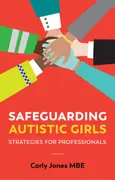 Safeguarding Autistic Girls
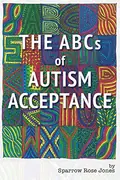 The ABCs of Autism Acceptance
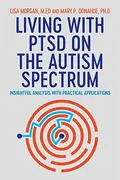 Living with PTSD on the Autism Spectrum
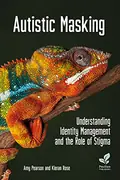 Autistic Masking
 Developing Personal Safety Skills in Children with Disabilities
 Loud Hands
Sources
Research
- 1Jones L, Bellis MA, Wood S, et al. Prevalence and risk of violence against children with disabilities: a systematic review and meta-analysis of observational studies. The Lancet, 2012. https://doi.org/10.1016/s0140-6736(12)60692-8
- 2Christoffersen MN. Sexual Crime Against Schoolchildren With Disabilities: A Nationwide Prospective Birth Cohort Study. Journal of Interpersonal Violence, 2022. https://doi.org/10.1177/0886260520934442
- 3Fisher MH, Epstein RA, Urbano RC, et al. A population-based examination of maltreatment referrals and substantiation for children with autism spectrum disorder. Autism, 2019. https://doi.org/10.1177/1362361318813998
- 4Mikton C, Maguire H, Shakespeare T. A systematic review of the effectiveness of interventions to prevent and respond to violence against persons with disabilities. Journal of Interpersonal Violence, 2014. https://doi.org/10.1177/0886260514534530
- 5Trundle G, Jones KA, Ropar D, et al. Prevalence of Victimisation in Autistic Individuals: A Systematic Review and Meta-Analysis. Trauma, Violence, & Abuse, 2023. https://doi.org/10.1177/15248380221093689
- 6Mansour H, Kurana S, Eshetu A, et al. Prevalence of Post-Traumatic Stress Disorder (PTSD) in autistic children or young people (CYP) and adults: A systematic review and meta-analysis. Clinical Psychology Review, 2025. https://doi.org/10.1016/j.cpr.2025.102621
- 7Smout S, Jung S, Bergink V, Mahjani B. Sex differences in post-traumatic stress disorder risk among autistic individuals: a population-based matched cohort study. European Child & Adolescent Psychiatry, 2026. https://doi.org/10.1007/s00787-026-03186-1
- 8Association for Real Change. Safety Net: because sometimes friends may not be what they seem (project flier). ARC, 2009. https://web.archive.org/web/20101216020649/http://www.arcsafety.net/assets/safety%20netflier29-6-09.pdf
- 9Forster S, Pearson A. "Bullies tend to be obvious": autistic adults perceptions of friendship and the concept of 'mate crime'. Disability & Society, 2020. https://doi.org/10.1080/09687599.2019.1680347
- 10Griffiths S, Allison C, Kenny R, et al. The Vulnerability Experiences Quotient (VEQ): A Study of Vulnerability, Mental Health and Life Satisfaction in Autistic Adults. Autism Research, 2019. https://doi.org/10.1002/aur.2162
- 11Kupferstein H. Evidence of increased PTSD symptoms in autistics exposed to applied behavior analysis. Advances in Autism, 2018. https://doi.org/10.1108/AIA-08-2017-0016
- 12Leaf JB, Ross RK, Cihon JH, Weiss MJ. Evaluating Kupferstein's claims of the relationship of behavioral intervention to PTSS for individuals with autism. Advances in Autism, 2018. https://doi.org/10.1108/aia-02-2018-0007
- 13Aguirre Mtanous NG, Koenig J, Nikahd M, et al. Mental health outcomes associated with applied behavior analysis in a US national sample of privately insured autistic youth. Autism, 2026. https://doi.org/10.1177/13623613251390604
- 14Hershkowitz I, Lamb ME, Horowitz D. Victimization of children with disabilities. American Journal of Orthopsychiatry, 2007. https://doi.org/10.1037/0002-9432.77.4.629
- 15Åker TH, Johnson MS. Interviewing alleged victims with mild and moderate intellectual disabilities and autism: A field study of police-investigated cases of physical and sexual abuse in a Norwegian national sample. Journal of Intellectual Disability Research, 2020. https://doi.org/10.1111/jir.12771
- 16Friedman-Hauser G, Katz C. "She has a history of making things up": Examining the disclosure and reporting of online sexual abuse among children with disabilities. Child Abuse & Neglect, 2025. https://doi.org/10.1016/j.chiabu.2025.107398
- 17Cazalis F, Reyes E, Leduc S, et al. Evidence That Nine Autistic Women Out of Ten Have Been Victims of Sexual Violence. Frontiers in Behavioral Neuroscience, 2022. https://doi.org/10.3389/fnbeh.2022.852203
- 18Maïano C, Normand CL, Salvas MC, et al. Prevalence of School Bullying Among Youth with Autism Spectrum Disorders: A Systematic Review and Meta-Analysis. Autism Research, 2016. https://doi.org/10.1002/aur.1568
- 19Park I, Gong J, Lyons GL, et al. Prevalence of and Factors Associated with School Bullying in Students with Autism Spectrum Disorder: A Cross-Cultural Meta-Analysis. Yonsei Medical Journal, 2020. https://doi.org/10.3349/ymj.2020.61.11.909
- 20Deniz E, Noret N, Chow ARW, et al. Bullying trajectories from childhood to adolescence: the relationship with mental health outcomes for autistic and neurotypical youth. Autism Research, 2026. https://doi.org/10.1002/aur.70227
- 21Cage E, Troxell-Whitman Z. Understanding the Reasons, Contexts and Costs of Camouflaging for Autistic Adults. Journal of Autism and Developmental Disorders, 2019. https://doi.org/10.1007/s10803-018-03878-x
- 22Akers BM, Peterson ZD. Comparing Prevalence of Multiple Types of Sexual Victimization Among Individuals with and without an Autism Spectrum Disorder Diagnosis. The Journal of Sex Research, 2026. https://doi.org/10.1080/00224499.2026.2645037
- 23Cusano J, Graham Holmes L, Caplan R, et al. Prevalence and Correlates of Dating Violence Victimization Among a U.S.-Based Sample of Autistic Youth. Journal of Interpersonal Violence, 2025. https://doi.org/10.1177/08862605241275997
- 24Douglas S, Sedgewick F. Experiences of interpersonal victimization and abuse among autistic people. Autism, 2024. https://doi.org/10.1177/13623613231205630
- 25US Department of Education, Office for Civil Rights. Civil Rights Data Collection, 2023-24. https://civilrightsdata.ed.gov/
- 26US Government Accountability Office. K-12 Education: Education Should Take Immediate Action to Address Inaccuracies in Federal Restraint and Seclusion Data. GAO-19-551R, 2019. https://www.gao.gov/products/gao-19-551r
- 27US Food and Drug Administration. Banned devices; proposal to ban electrical stimulation devices for self-injurious or aggressive behavior. Federal Register, 89 FR 20882, 2024. https://www.federalregister.gov/documents/2024/03/26/2024-06037/banned-devices-proposal-to-ban-electrical-stimulation-devices-for-self-injurious-or-aggressive
- 28Judge Rotenberg Educational Center, Inc. v. FDA, 3 F.4th 390 (D.C. Cir. 2021). https://www.courtlistener.com/opinion/4897665/the-judge-rotenberg-educational-center-inc-v-fda/
- 29Quinton AMG, Ali D, Danese A, Happé F, Rumball F. The Assessment and Treatment of Post-traumatic Stress Disorder in Autistic People: A Systematic Review. Review Journal of Autism and Developmental Disorders, 2026. https://doi.org/10.1007/s40489-024-00430-9
- 30Lobregt-van Buuren E, Sizoo B, Mevissen L, de Jongh A. Eye Movement Desensitization and Reprocessing (EMDR) Therapy as a Feasible and Potential Effective Treatment for Adults with Autism Spectrum Disorder (ASD) and a History of Adverse Events. Journal of Autism and Developmental Disorders, 2019. https://doi.org/10.1007/s10803-018-3687-6
- 31McDonnell CG, Andrzejewski T, Batista SG, et al. A Pilot Proof-of-Concept Study of Telehealth-Based Trauma-Focused Cognitive Behavioral Therapy for Autistic Youth: Initial Evidence of Efficacy and Acceptability. Child Maltreatment, 2026. https://doi.org/10.1177/10775595251323215
- 32Santomauro DF, Hedley D, Sahin E, et al. The global burden of suicide mortality among people on the autism spectrum: A systematic review, meta-analysis, and extension of estimates from the Global Burden of Disease Study 2021. Psychiatry Research, 2024. https://doi.org/10.1016/j.psychres.2024.116150
Books and writing
- c1Sparrow M. The ABCs of Autism Acceptance. Autonomous Press, 2016. Chapters "N is for No Means No" and "B is for Bullying".
 Book page Back to text
- c2Gratton FV. Supporting Transgender Autistic Youth and Adults: A Guide for Professionals and Families. Jessica Kingsley Publishers, 2019. Chapter 8, "Navigating the Cisgender Neurotypical World".
 Book page Back to text
- c3Pearson A, Rose K. Autistic Masking: Understanding Identity Management and the Role of Stigma. Pavilion Publishing and Media, 2023. Chapter 8, "Trauma", section "Behavioural Interventions".
 Book page Back to text
- c4Morgan L, Donahue MP. Living with PTSD on the Autism Spectrum: Insightful Analysis with Practical Applications. Jessica Kingsley Publishers, 2020. Foreword by Tony Attwood.
 Book page Back to text