What unmasking is and how it unfolds
How researchers and autistic adults describe unmasking, the gradual and context-dependent way it seems to happen, what makes it hard, and how it can unfold after a late diagnosis. The research on it is new and small.
What it means for an autistic person to stop hiding being autistic, how it seems to happen bit by bit, and why it can be hard. Only a few small studies have looked at it so far.
What researchers mean by unmasking Emerging
Unmasking is the reverse of masking, in which autistic people hide autistic traits or work around them in social situations. A US study of autistic college students, which describes itself as the first to examine experiences of unmasking and their effect on mental health, defines it as "the deliberate effort to stop masking and reclaim a more authentic self-presentation".1 As of October 2026, that study and a Swedish one are the only two found that take unmasking itself as their subject.1,2
The Swedish study, led by a neurodivergent research team, drew on interviews with 29 adults aged 18 to 64, each interviewed one to four times for a larger project on autistic flourishing. Twenty-one were women, 17 also had ADHD, and 26 had a formal diagnosis while the others identified as autistic. The interviews asked about a good autistic life, and every participant brought up unmasking.2 The researchers describe unmasking as relational and dependent on context. Some participants described lives that were almost entirely unmasked, others lives that were still highly masked.2
Participants who had reflected on their masking in depth found it in the body (eye contact, posture), in speech, in pace (answering before they had processed a question), in pretending to understand, in going along with requests, and in expectations they had taken on as their own.2 In an earlier study, 17 autistic adults who watched a video of their own conversation with a stranger picked out 38 different camouflaging behaviors.3 When 133 UK autistic adults, mostly White and university educated, described socializing in ways that felt authentic, they called it freer, more spontaneous and more open than camouflaging.4
Some autistic people hide being autistic around others. This is called masking. Unmasking means trying to stop doing that. One study of autistic college students calls it a planned effort to stop masking. The aim is to act more like your real self.1
Only two studies so far are mainly about unmasking.1,2 One was in Sweden. It talked with 29 adults, mostly women.2 They were asked about a good autistic life. All of them brought up unmasking anyway. Some lived almost unmasked. Others still masked a lot.2
People said they masked with their bodies, like making eye contact. They also masked by answering fast before they had time to think. Some pretended to understand, or agreed to things they did not want.2 In another study, people watched a video of themselves talking. They spotted 38 different ways they had hidden being autistic.3 When adults could be themselves, they said talking felt freer and more open.4
Two studies, both from 2026, take unmasking as their subject: a Swedish interview study and a US study of college students. Neither has been repeated, and the Swedish interviews came from a wider project on autistic flourishing that was not designed around unmasking. The two studies of what camouflaging looks like and feels like come from one UK research group.
A study that collects people's own accounts, usually in interviews or written answers, and looks for shared themes instead of measuring amounts.
Only two studies look right at unmasking. Both came out in 2026. Nobody has checked their results yet.
A study that asks people to describe their lives in their own words. Then it looks for ideas that come up again and again.
A gradual process that repeats Emerging
The Swedish study describes unmasking as four steps in a circle: recognizing the need to unmask, understanding one's own masking, using unmasking strategies, and managing the consequences. New situations kept arising, so the cycle repeated.2 Participants said they wanted to feel better, save energy, and see themselves with love instead of shame, and they described the need growing stronger as they got older.2
They tended to start with whatever was most stressful or easiest to change, and in safer places; home was generally the safest.2 Their strategies included learning from other autistic people, telling others what they needed (such as more time to process), choosing situations where they did not have to mask, and writing instead of speaking.2 The authors suggest that removing masking completely may be neither feasible nor necessary. For several participants the aim was to mask less often, on their own terms.2
Among 214 US autistic college students surveyed and 14 interviewed, most had heard of unmasking and half had tried it. Those surveyed unmasked infrequently overall, and how often they did so varied between social settings. Interviewees varied widely in how able and willing they were to unmask.1
The Swedish study describes unmasking as four steps in a circle. First you notice you need to unmask. Then you learn how you mask. Then you try new ways of acting. Then you deal with how others react. New places kept coming up, so the circle kept going.2
People wanted to feel better and save energy. They also wanted to like themselves instead of feeling ashamed. They said the need grew as they got older.2 They often started at home, where it felt safest. They began with the habits that were most tiring or easiest to change.2 The researchers think stopping masking completely may not be possible or needed. Some people wanted to mask less, and only when they chose to.2
In a study of autistic college students, about half had tried unmasking. Most did not do it often. How often depended on where they were.1
The four-step model comes from one study of 29 Swedish adults, most of them women and most with ADHD, and has not been tested. The US study also found wide variation between people and settings, but did not describe a cycle.
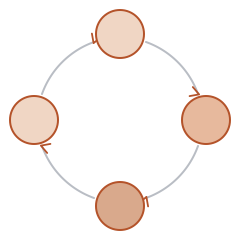
The four-step cycle described in the Swedish study. Clockwise from the top: recognizing the need to unmask, understanding one's own masking, using unmasking strategies, managing the consequences. Schematic.
The four steps come from one Swedish study. Nobody has tested them yet.
The four-step cycle described in the Swedish study. Clockwise from the top: recognizing the need to unmask, understanding one's own masking, using unmasking strategies, managing the consequences. Schematic.
Where it happens, and with whom Emerging
In the UK survey, participants described socializing authentically in supportive settings as having more positive and fewer negative consequences than camouflaging. Participants said it came more easily when they were aware of and accepted their own social needs, and when they were around accepting, understanding autistic and non-autistic people.4 In a small lab study, 23 autistic and 25 non-autistic adults recorded video answers to an imagined job interview and an imagined call with a trusted person. The interview raised effort for everyone, but autistic adults' sense of being inauthentic, self-monitoring and anxiety rose more. The authors call it an initial test that needs repeating.5
Being among autistic people did not always make it easy. Some Swedish participants found it hard to stop masking even with other autistic people, because they were so used to masking.2 An ethnography of Autscape, an autistic-led conference in England, describes a space that its participants imagine as one where masks can come off; the study's title calls what remains "a smaller mask".6 Among 14 students interviewed at one US college, worry about backlash eased when friends or other people who were unmasking supported them.1
Eight autistic students in Hong Kong described a balance between masking and unmasking, and saw benefits in masking as well as costs. The authors report cultural differences in social preferences and masking that the Western-dominated research has not described.7
Adults said being themselves was easier around kind, accepting people. Those people could be autistic or not.4 In one small test, adults pretended to answer a job interview. For autistic adults, this made them feel more fake and more worried than other adults.5
Being with other autistic people did not always make it easy. Some people had masked for so long that they kept masking even then.2 Some autistic people describe an autistic-run event in England as a place where masks can come off.6 Students worried less about unkind reactions when friends supported them. They said unmasking eased the stress of masking.1
Students in Hong Kong said they try to balance masking and unmasking. They saw some good in masking as well as costs.7
Interview and open-answer studies, one ethnography and one small lab study. They agree that the setting and the people present matter, but none followed the same people across settings over time.
These findings come from interviews, surveys and one small lab test. Scientists are not sure yet how much the setting matters.
What makes it hard Emerging
Among the 14 US students interviewed, unmasking was difficult to impossible when masking was deeply ingrained, because taking apart their masking habits and rediscovering a "true self" was hard.1 Swedish participants described masking that ran automatically, so they had to remind themselves to unmask; one participant said they did not know where they began and the masking ended.2 In 11 Singaporean autistic adults, 9 of them men, camouflaging grew more complex over the years and for some became part of how they saw themselves.8
Other people's reactions add costs. Swedish participants described apologizing constantly, feeling shame, being asked whether they were unwell once they stopped arranging their faces, and having their interests criticized as childish.2 The 14 interviewees also said unmasking relieved the stress of masking and made them feel more authentic.1 The author concludes that, for those able to unmask, its drawbacks were rooted in worry about stigma and backlash from others, not in unmasking itself.1 That interpretation sits alongside the internal barriers the same study reports, such as deeply ingrained masking.
In an online survey of 330 autistic adults in Japan aged 18 to 39, feeling accepted by others, together with loneliness, statistically linked ableist microaggressions to trying to blend in; self-acceptance did not.9 Two surveys complicate the idea that a stronger autistic identity simply goes with less masking. In 196 autistic people, mostly women, stronger connection to the autistic community went with better wellbeing and also with more reported masking, and it did not soften the link between masking and poorer wellbeing.10 In 180 autistic adults, a stronger autistic identity went with being more open about being autistic and, through that, with less camouflaging, yet the direct link between identity and camouflaging was positive.11 Each survey measured everything at one time, so none can show what led to what.
For some students, masking was a deep habit. That made unmasking very hard. They found it hard to find their "true self".1 Some people masked without noticing. They had to remind themselves to stop.2 For some adults, masking slowly became part of who they felt they were.8
Other people's reactions can make it harder. Some people kept saying sorry or felt ashamed. Others asked if they were sad, just because they stopped smiling all the time. Some were told their interests were childish.2
In one survey, being accepted by others seemed to matter more than accepting yourself.9 People who felt close to other autistic people felt better overall. But they also said they masked more.10 People who felt strongly autistic were more open about it, and that went with less masking.11 These surveys asked questions only once. So scientists cannot tell what causes what.
Small interview studies and single online surveys. The surveys measured everything once and show associations only. The two identity surveys come from one research group.
Small, everyday remarks or acts that put someone down for being disabled.
These come from small studies. The surveys only show that two things go together, not that one causes the other.
After a late diagnosis Emerging
A systematic review of 26 studies of the lived experience of adult diagnosis found two overarching themes. "Constantly Struggling" covered the time before and around diagnosis, and "Revelation" included forging an autistic identity. Stigma, regret and inadequate support often continued after diagnosis.12
In 34 Australian adults who recognized they were autistic after age 18 (some through self-identification, and 29 also identifying as ADHD), people described re-authoring their life story. The process was non-linear, with back-and-forth, grief or anger about missed support, and a turn toward authenticity in how they planned their future.13 Among 14 adults diagnosed at 50 to 73, some stayed in a pattern the researchers call "surviving", marked by self-blame. Others moved toward "thriving", with more self-compassion and lives closer to their autistic identity, but only after years, and with movement back and forth.14
Ten Australian women diagnosed after 30 described grief at revisiting the past alongside "the relief of authenticity", among seven themes.15 Eleven Australian adults without intellectual disability, diagnosed in the previous six months and trying out a self-guided resource, described both relief and grief over years of masking.16 In 151 autistic adults surveyed once, more time since diagnosis went with less dissatisfaction with being autistic.17 One Swedish participant described being more exhausted than ever in the year they realized they were autistic, as if a whole life of masking had to leave their system.2
Some people find out they are autistic as adults. A review of 26 studies found two big ideas. One was struggling for a long time. The other was a new understanding of themselves.12
In one study, adults said they rewrote their life story. It did not go in a straight line. They felt grief or anger about the help they missed.13 In another study of people aged 50 to 73, feeling good about being autistic took years. People moved back and forth along the way.14
Some felt relief and grief at the same time.15,16 People who had known longer felt less unhappy about being autistic.17 One person felt more tired than ever in the year they found out.2
A systematic review of 26 studies supports the broad themes of being diagnosed as an adult. Most of these studies are about identity after diagnosis, not unmasking; only the Australian re-authoring study, the Welcome Pack study and the Swedish study mention masking. All are single small studies, several of mostly women or of people who also have ADHD.
A study that searches for all the research on a question using set rules and combines what it finds.
One large review supports the main ideas about being diagnosed as an adult. Most of these studies are about who people feel they are, not about unmasking. The details come from small studies.
A study that gathers many other studies on one question and puts what they found together.
How much is known Emerging
No validated questionnaire or test found as of October 2026 measures unmasking, and no study has followed people over time as they unmask, so whether unmasking improves mental health has not been tested directly. The one study of camouflaging over time found here followed 332 Dutch autistic adults aged 30 to 84 for about two years. Those who camouflaged more at the start showed a small decrease in mental health difficulties, and those who camouflaged less a small increase. The authors found no strong evidence that camouflaging leads to mental health difficulties, though they call cause and effect unresolved.18 In the US college survey, a single survey at one time, finding unmasking difficult went with more anxiety, and unmasking with family went with less anxiety and depression. The author reads the survey's weaker results as suggesting unmasking helps those who try it, but these are associations, and people who chose to try it may differ from those who did not.1 In a small study of autistic burnout, participants named "doing things in an autistic way/unmasking" among what they linked with recovery.19
Masking in children is documented. Among 136 autistic children aged 8 to 14, masking was common; most felt positive about being autistic at home, and fewer did around peers or teachers.20 In 31 autistic girls in US high schools, camouflaging was least common at home and with neurodivergent friends.21 In girls aged 11 to 14 with autism, ADHD or a coordination disorder, camouflaging was already evident; they differed from other girls on one part of it, trying to blend in.22 A questionnaire on children's masking has been developed and so far tested only for acceptability.23 No study found as of October 2026 has looked at unmasking in children or adolescents.
Scientists have no test to measure unmasking yet. No study has followed people over time as they unmask. So nobody knows yet if unmasking helps mental health. One study followed adults who masked for two years. Those who masked more did not get worse.18 In the college survey, unmasking with family went with less worry and sadness. That survey asked questions only once.1 People with autistic burnout linked acting in an autistic way with getting better.19
Kids mask too. Autistic kids felt best about being autistic at home.20 Autistic teen girls masked least at home and with friends who were also different.21 Some girls already mask by age 11 to 14.22 There is a new questionnaire about masking in kids.23 But no study has looked at unmasking in kids or teens yet.
No measure, no study over time, and no study of unmasking in people under 18. The few numbers on unmasking itself come from one survey of US college students, measured once.
One analysis argues that masking is a response to stigma and is not necessarily a choice.24 Non-autistic people also describe masking and feeling cut off from who they are, though suppressing sensory reactions and stimming, and masking leading to suicidal thoughts, came up only in autistic people's free-text answers in that survey.25 A philosophical critique holds that the concept of camouflaging is unstable and is measured in circular ways.26 Another view treats camouflaging as a form of the impression management everyone does, with particular challenges for autistic people, and costly when it is compelled.27
There is no test for unmasking yet. No study has followed people over time, and none has looked at unmasking in kids.
In the community Community
Autistic writers describe unmasking as slow and partial. Devon Price writes: "Unmasking doesn't happen in one big burst of confidence; it's a gradual process of relaxing your inhibitions, trusting your feelings, and letting go of compensatory strategies that no longer suit you."c1 Megan Griffith calls it "often a lifelong process" and adds that it "isn't possible for everyone in every situation".c3
Several writers reject the idea of taking off every mask. Sol Smith notes that online talk sometimes treats unmasking as a mutiny, or as a pure self "free of all social constructions", which Smith calls impossible: "We all tend to have a baseline level of acceptable socialization somewhere, and there's no need to remove all of it."c4 For job interviews, Price suggests making "an intentional decision about how much masking (and which forms of masking) are acceptable for you".c8 This is close to the Swedish participants above, for whom the aim was to mask less often, on their own terms.
Daniel Burford, writing for adults diagnosed late, makes the same point: "You're not going to end up fully unmasked, and there's no version of you at the end of this who never modulates." Burford adds that some of what a person took for mask will turn out to be them, and that learned social skills are not a performance when they cost nothing.c9 Amy Pearson and Kieran Rose question the picture of a mask that comes off in one piece. They describe masking as "a collection of conscious and unconscious features across a variety of domains and aspects of identity", and argue that authenticity grows instead from self-insight and self-understanding.c10
For writers who found out late that they were autistic, the first question can be what is left under the mask. Orion Kelly, diagnosed later in life, asks who was under it: "And was I even capable of taking it off?"c11 Helen, writing in her fifties in a collection of autistic adults' accounts edited by Alex Ratcliffe, describes the opposite turn: knowing she will never pass as neurotypical for long gives her "the freedom to give up the game of pretence and let my mind go free."c12
Writers suggest different first steps. Megan Anna Neff writes: "The first step toward shedding the chameleon skin is to invest time in discovering your own desires, wants, and needs."c7 Griffith had acted neurotypical for so long that finding out what came naturally meant having to "act" neurodivergent, trying more obvious stims and bright, comfortable clothes, which at first felt just as false.c3 Advice Griffith gathered from other AuDHD adults includes keeping a record of times they were themselves, as "evidence that being yourself is safe", going "cold turkey" for a few weeks, and preparing to rest more, because unmasking can be exhausting.c3 Smith urges starting "from a place of control and autonomy rather than taking the more common route of hitting rock bottom", while refusing to shame people who start from a crisis.c6
Writers also describe a hard middle stage. Smith compares unmasking to a caterpillar dissolving in its cocoon: removing the mask can feel like identity is "melting into an unrecognizable goo", and progress "is not necessarily linear".c5 Price writes that unmasking in public can feel nearly impossible, because around other people "it's as if we have no thoughts or feelings of our own", and warns: "Often it will be nerve-racking and awkward."c2
Burford separates unmasking from a mask that is failing. When masking stops working, Burford advises asking whether it is burnout before assuming it is unmasking, because "those need opposite responses": unmasking asks for action, burnout for rest.c9 Kelly asks the people around an autistic adult not to say they seem "way more Autistic" than usual, since that person has been masking all along, and no longer being able to mask can be a sign of burnout.c13
Autistic writers say unmasking is slow. Devon Price says it does not happen in one big burst of confidence. It is a gradual process of letting go.c1 Megan Griffith says it can take a lifetime. Griffith adds it is not possible for everyone in every situation.c3
Many writers say you do not have to drop every mask. Sol Smith says unmasking is not a mutiny. Smith says everyone keeps some ordinary social habits, and that is fine.c4 Price suggests choosing how much to mask at a job interview.c8 This is like the Swedish adults above. They wanted to mask less often, on their own terms.
Daniel Burford writes for adults who learn late that they are autistic. Burford says nobody ends up fully unmasked. Some things you thought were a mask turn out to be you. Social skills you learned are not an act if they cost you nothing.c9 Amy Pearson and Kieran Rose say a mask is not one thing you take off. It is many habits, some done on purpose and some not. They say being yourself grows from getting to know yourself.c10
Some people find out late in life that they are autistic. Orion Kelly was one. Kelly wondered who was under the mask, and whether it could come off at all.c11 Helen wrote about her life in her fifties. She knows now she can never pass as non-autistic for long. She says that knowing this sets her free to stop pretending.c12
Writers suggest different first steps. Megan Anna Neff says to start by finding out what you want and need.c7 Griffith had to practice acting autistic at first. That meant more open stims and bright, comfy clothes. At first it felt fake too.c3 Other adults told Griffith what helped them. Some kept a record of times they were themselves. Others tried a few weeks of acting naturally. Many said to plan for more rest.c3 Smith says it is better to start when you feel in control, not at rock bottom. But Smith does not blame people who start in a crisis.c6
The middle can be hard. Smith compares it to a caterpillar melting inside its cocoon. You may feel you are losing who you are. Progress is not always a straight line.c5 Price says unmasking in public can feel almost impossible. Price warns it will often feel scary and awkward.c2
Burford says a mask that is breaking down is not the same as unmasking. It can be a sign of burnout, which means being worn out for a long time. Unmasking asks you to do something. Burnout asks you to rest.c9 Kelly asks people not to say someone seems more autistic than usual. That person was masking all along. Not being able to mask anymore can be a sign of burnout.c13
Sources
Research
- 1Durben DL. Unmasking: A Mixed-Methods Study of Autistic College Students' Efforts to Stop Masking/Camouflaging. Journal of Autism and Developmental Disorders, 2026. https://doi.org/10.1007/s10803-026-07409-x ; https://pubmed.ncbi.nlm.nih.gov/42435102/
- 2Hedlund Å, Unéus D, Wik J, et al. Reclaiming selfhood: towards a conceptualisation of the autistic unmasking process. Frontiers in Psychiatry, 2026. https://doi.org/10.3389/fpsyt.2026.1929738 ; https://pubmed.ncbi.nlm.nih.gov/42723981/
- 3Cook J, Crane L, Hull L, et al. Self-reported camouflaging behaviours used by autistic adults during everyday social interactions. Autism, 2022. https://doi.org/10.1177/13623613211026754 ; https://pubmed.ncbi.nlm.nih.gov/34180249/
- 4Cook JM, Crane L, Mandy W. Dropping the mask: It takes two. Autism, 2024. https://doi.org/10.1177/13623613231183059 ; https://pubmed.ncbi.nlm.nih.gov/37403917/
- 5Ai W, Yu JX, Jacob BK, et al. A novel context-discrepancy assessment of impression management facets in autistic and non-autistic adults: an initial validation. Molecular Autism, 2026. https://doi.org/10.1186/s13229-026-00715-2 ; https://pubmed.ncbi.nlm.nih.gov/41964080/
- 6Belek B. 'A Smaller Mask': Freedom and Authenticity in Autistic Space. Culture, Medicine, and Psychiatry, 2023. https://doi.org/10.1007/s11013-022-09794-1 ; https://pubmed.ncbi.nlm.nih.gov/35753012/
- 7Tong ASL, Lam GYH. "Everyone Has a Different Body Constitution": An Interpretative Phenomenological Analysis of the Experiences of Social Interaction and Related Supports in Chinese Autistic Postsecondary Students. Autism, 2026. https://doi.org/10.1177/13623613261466305 ; https://pubmed.ncbi.nlm.nih.gov/42522543/
- 8Loo BRY, Teo TJY, Liang MJ, et al. Exploring autistic adults' psychosocial experiences affecting beginnings, continuity and change in camouflaging over time: A qualitative study in Singapore. Autism, 2024. https://doi.org/10.1177/13623613231180075 ; https://pubmed.ncbi.nlm.nih.gov/37300411/
- 9Guan S, Takahashi F, Wada M, et al. Understanding autistic identity contingencies: The chain mediation effect of autism acceptance and loneliness in ableist microaggressions and social camouflage. Autism, 2026. https://doi.org/10.1177/13623613251389876 ; https://pubmed.ncbi.nlm.nih.gov/41351454/
- 10Cage E, Cranney R, Botha M. Brief Report: Does Autistic Community Connectedness Moderate the Relationship Between Masking and Wellbeing? Autism in Adulthood, 2022. https://doi.org/10.1089/aut.2021.0096 ; https://pubmed.ncbi.nlm.nih.gov/36606159/
- 11Cage E, Troxell-Whitman Z. Understanding the Relationships Between Autistic Identity, Disclosure, and Camouflaging. Autism in Adulthood, 2020. https://doi.org/10.1089/aut.2020.0016 ; https://pubmed.ncbi.nlm.nih.gov/36600960/
- 12Nayyar JM, Stapleton AV, Guerin S, et al. Exploring Lived Experiences of Receiving a Diagnosis of Autism in Adulthood: A Systematic Review. Autism in Adulthood, 2025. https://doi.org/10.1089/aut.2023.0152 ; https://pubmed.ncbi.nlm.nih.gov/40151652/
- 13Quinlan E, Emery H. 'Joining the Dots Across Time': A Temporal Conceptual Model of Self-Concept Reconstruction Following Late Recognition of Autism. Autism, 2026. https://doi.org/10.1177/13623613261486062 ; https://pubmed.ncbi.nlm.nih.gov/42755352/
- 14Kirton JA, Tod A, Ryan T. Surviving to Thriving: A Grounded Theory of Post-Diagnostic Identity Reconstruction in Midlife and Older Autistic Adults. Autism, 2026. https://doi.org/10.1177/13623613261483304 ; https://pubmed.ncbi.nlm.nih.gov/42728848/
- 15Pollock A, Krupka Z. Late bloomers: Exploring the emotional landscape of Australian women's experiences of a late Autism diagnosis. Autism, 2026. https://doi.org/10.1177/13623613251386983 ; https://pubmed.ncbi.nlm.nih.gov/41169026/
- 16Edwards C, Love AM, Cai RY, et al. "I'm not feeling alone in my experiences": How newly diagnosed autistic adults engage with a neurodiversity-affirming "Welcome Pack". Autism, 2025. https://doi.org/10.1177/13623613251335070 ; https://pubmed.ncbi.nlm.nih.gov/40277162/
- 17Corden K, Brewer R, Cage E. Personal Identity After an Autism Diagnosis: Relationships With Self-Esteem, Mental Wellbeing, and Diagnostic Timing. Frontiers in Psychology, 2021. https://doi.org/10.3389/fpsyg.2021.699335 ; https://pubmed.ncbi.nlm.nih.gov/34393933/
- 18van der Putten WJ, Mol AJ, Radhoe TA, et al. Camouflaging in autism: A cause or a consequence of mental health difficulties? Autism, 2025. https://doi.org/10.1177/13623613251347104 ; https://pubmed.ncbi.nlm.nih.gov/40579935/
- 19Raymaker DM, Teo AR, Steckler NA, et al. "Having All of Your Internal Resources Exhausted Beyond Measure and Being Left with No Clean-Up Crew": Defining Autistic Burnout. Autism in Adulthood, 2020. https://doi.org/10.1089/aut.2019.0079 ; https://pubmed.ncbi.nlm.nih.gov/32851204/
- 20Mullally SL, Wood AE, Edwards CC, et al. Growing-up autistic: Sharing autistic children's experiences and insights. Autism, 2026. https://doi.org/10.1177/13623613261427795 ; https://pubmed.ncbi.nlm.nih.gov/41889185/
- 21Goscicki BL, Scoggins ME, Espinosa GH, et al. A "Round, Bruising Sort of Pain": Autistic Girls' Social Camouflaging in Inclusive High School Settings. Journal of Autism and Developmental Disorders, 2026. https://doi.org/10.1007/s10803-024-06716-5 ; https://pubmed.ncbi.nlm.nih.gov/39794639/
- 22McKinney A, O'Brien S, Maybin JA, et al. Camouflaging in neurodivergent and neurotypical girls at the transition to adolescence and its relationship to mental health: A participatory methods research study. JCPP Advances, 2024. https://doi.org/10.1002/jcv2.12294 ; https://pubmed.ncbi.nlm.nih.gov/39734921/
- 23Delara L, Ayadi O'Donnell N, Baldoza S, et al. Development and pilot evaluation of the Children's Masking Questionnaire. Frontiers in Psychiatry, 2026. https://doi.org/10.3389/fpsyt.2026.1893936 ; https://pubmed.ncbi.nlm.nih.gov/42564193/
- 24Pearson A, Rose K. A Conceptual Analysis of Autistic Masking: Understanding the Narrative of Stigma and the Illusion of Choice. Autism in Adulthood, 2021. https://doi.org/10.1089/aut.2020.0043 ; https://pubmed.ncbi.nlm.nih.gov/36601266/
- 25Miller D, Rees J, Pearson A. "Masking Is Life": Experiences of Masking in Autistic and Nonautistic Adults. Autism in Adulthood, 2021. https://doi.org/10.1089/aut.2020.0083 ; https://pubmed.ncbi.nlm.nih.gov/36601640/
- 26Adamou M, Koutsoklenis A. Camouflaging in autism as a dual-normative construct: a philosophical critique. Theoretical Medicine and Bioethics, 2026. https://doi.org/10.1007/s11017-026-09763-4 ; https://pubmed.ncbi.nlm.nih.gov/42334760/
- 27Ai W, Cunningham WA, Lai MC. Reconsidering autistic 'camouflaging' as transactional impression management. Trends in Cognitive Sciences, 2022. https://doi.org/10.1016/j.tics.2022.05.002 ; https://pubmed.ncbi.nlm.nih.gov/35641372/
Community sources
- c1Price D. Unmasking Autism: Discovering the New Faces of Neurodiversity. Harmony Books, 2022. Chapter 5, "Rethinking Autism", section "Feeling Gratitude for Your Autism—and Your Past". Devon Price's site
- c2Price D. Unmasking Autism: Discovering the New Faces of Neurodiversity. Harmony Books, 2022. Chapter 7, "Cultivating Autistic Relationships". Devon Price's site
- c3Griffith M. Welcome to AuDHD: How to Survive (and Thrive) as an Adult with Autism and ADHD. Jessica Kingsley Publishers, 2026. Chapter 6, "To Mask or Not to Mask: Coping with Neurotypical Expectations", section "How to unmask". Megan Griffith's site
- c4Smith S. The Autistic's Guide to Self-Discovery: Flourishing as a Neurodivergent Adult. New World Library, 2025. Chapter 6, "Why We Unmask". Sol Smith's site
- c5Smith S. The Autistic's Guide to Self-Discovery: Flourishing as a Neurodivergent Adult. New World Library, 2025. Chapter 7, "The Storm Before the Calm". Sol Smith's site
- c6Smith S. The Autistic's Guide to Self-Discovery: Flourishing as a Neurodivergent Adult. New World Library, 2025. Chapter 8, "Mindful Unmasking", section "Take a Breath". Sol Smith's site
- c7Neff MA. Self-Care for Autistic People: 100+ Ways to Recharge, De-Stress, and Unmask! Adams Media, 2024. Chapter 3, "Emotional Self-Care", section "Part Ways with Masking". Megan Anna Neff's site
- c8Price D. Unmasking for Life: The Autistic Person's Guide to Connecting, Loving, and Living Authentically. Harmony Books, 2025. Chapter 4, "Work", section "Unmasking for Job Interviews". Devon Price's site
- c9Burford D. The Unmasking Years: The Map No One Gave You After Your Diagnosis. Narrow Lake, 2026. Chapter 4, "The Mask Wasn't Your Fault (But Now You Get to Decide)".
- c10Pearson A, Rose K. Autistic Masking: Understanding Identity Management and the Role of Stigma. Pavilion Publishing and Media, 2023. Chapter 12, "How to safely foster authenticity", section "Fostering Authenticity".
- c11Kelly O. Autism Feels ...: An Earthling's Guide. Dean Publishing, 2023. Chapter 8, "Autistic Masking", section "Detrimental Effects of Masking".
- c12Ratcliffe A, ed. Our Autistic Lives: Personal Accounts from Autistic Adults Around the World Aged 20 to 70+. Jessica Kingsley Publishers, 2019. Chapter "Helen".
- c13Kelly O. Autism Feels ...: An Earthling's Guide. Dean Publishing, 2023. Chapter 10, "Autistic Burnout", section "No Longer Being Able to Mask".